
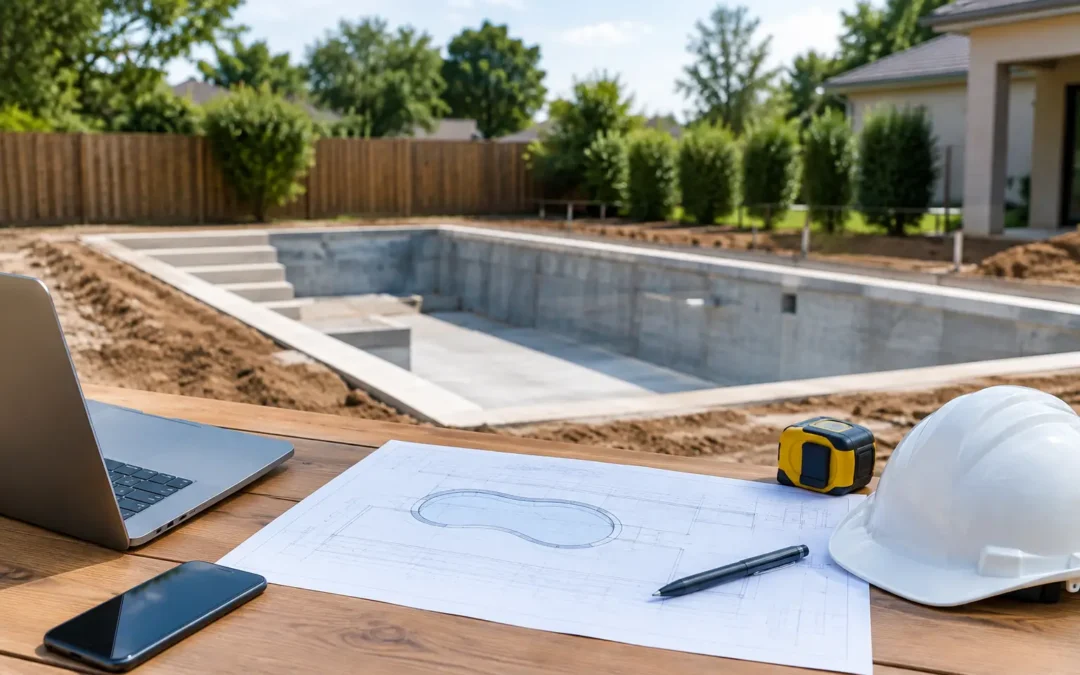
A new pool does not appear in a backyard overnight, and homeowners deserve a clear picture of what happens between the first design conversation and the first swim. This pool construction timeline explained for Jacksonville homeowners outlines the major stages, typical timing, and the factors that can affect a custom build.
For most custom in-ground pools, the full process commonly takes several months from signed agreement to startup. The construction phase itself may be much shorter, but design decisions, permitting, inspections, weather, material availability, and the complexity of your outdoor living plan all matter. A dependable builder sets realistic expectations early, communicates through each phase, and protects the quality of the finished project rather than rushing work that needs time to cure or pass inspection.
Pool Construction Timeline Explained, Phase by Phase
Design, selections, and project planning
The timeline starts before equipment arrives in your yard. During planning, the pool is shaped around how your family will use the space. That may mean a clean geometric pool for entertaining, a tanning ledge for younger children, a spa for year-round relaxation, or integrated fire and water features that create a complete backyard destination.
This stage typically takes one to three weeks, although it can take longer when homeowners are comparing finish colors, decking materials, tile options, and features. Early decisions are valuable because they reduce changes after construction begins. The more customized the project, the more attention the design phase deserves.
A quality plan also considers practical details that affect long-term enjoyment: access for construction equipment, drainage, setbacks, utility locations, equipment placement, and how the pool will connect with patios, landscaping, or an outdoor kitchen. A beautiful design must also be buildable, code-compliant, and appropriate for the property.
Engineering, permitting, and approvals
Once the design is finalized, plans move into engineering and permitting. Depending on the property and scope, this may include a site plan, construction drawings, structural details, and review by the appropriate local jurisdiction. If you live in a community with a homeowners association, architectural approval can add another step.
Permit timing varies. Some approvals move quickly, while others require revisions or additional review. Homeowners should be cautious of any contractor who promises a fixed permit date before plans are submitted. Local requirements and agency workloads are outside a builder’s direct control, but an experienced Jacksonville pool contractor can prepare complete documentation and keep the process moving.
This is also the point when utility coordination and property conditions can come into focus. Easements, drainage requirements, septic systems, mature trees, and limited access do not always stop a project, but they can influence the plan, cost, and schedule.
Scheduling and site preparation
After permits are in place, your project is scheduled for construction. Before excavation, the crew confirms access, marks utilities, establishes the work area, and reviews how equipment will enter and exit the property. Homeowners may need to remove movable furniture, protect vehicles from construction traffic, and make arrangements for pets during active workdays.
Site preparation is usually brief, but it is an important transition. Construction is active, loud, and sometimes dusty. A professional team respects the property, but a pool build is still a major outdoor construction project. Understanding that upfront helps homeowners plan around work hours and temporary changes to their backyard routine.
Excavation and forming
Excavation is the stage most people picture when they think about building a pool. Heavy equipment removes soil according to the approved shape, depth, and elevation. For a straightforward pool with good access, digging can take one to three days. Difficult soil, rain, groundwater, limited equipment access, or unexpected underground conditions can extend that window.
After excavation, crews establish the pool’s final form and prepare for the structural work. The hole in the ground is not the finished shell. Precise layout and elevation work are necessary to ensure the pool, spa, tanning ledge, and waterline sit exactly where they should.
Steel, plumbing, electrical, and inspections
Next, reinforcing steel is installed to create the structural framework of the pool. Plumbers run the lines that will serve drains, returns, skimmers, water features, and spa jets. Electrical work is coordinated for lighting, automation, bonding, and equipment connections.
This phase often takes several days to a week, depending on the design. A simple pool has fewer moving parts than a feature-rich backyard with a raised spa, multiple water features, gas fire elements, landscape lighting, and advanced automation. More features can add time, but they also create a more tailored outdoor experience when planned and installed correctly.
Required inspections generally occur before the shell is applied. Inspections are not a setback when they are anticipated in the schedule. They are a key safeguard that confirms critical work meets applicable standards before it is covered by concrete.
Gunite or shotcrete shell and curing
Once the framework is approved, the crew applies the concrete shell, often called gunite or shotcrete. This is one of the most significant construction days because it establishes the permanent structure of the pool. The application itself may be completed in a day, but the shell needs time to cure.
Curing should never be treated as optional. Depending on the builder’s specifications and weather conditions, the shell may need regular watering and a period of rest before subsequent finishes are installed. Jacksonville’s heat and afternoon rain can influence this phase, which is why a realistic schedule includes room for weather and proper material performance.
At this point, the pool begins to look real, but there is still substantial work ahead. Tile, coping, decking, finishes, equipment setup, and final inspections all contribute to the appearance, comfort, and reliability of the completed backyard.
Tile, coping, decking, and outdoor features
Tile is installed at the waterline and, when selected, on spas, raised walls, or water features. Coping is added around the pool edge, creating the transition between the water and the surrounding deck. These materials have a major impact on the finished look, from classic and understated to bold and resort-inspired.
Decking and hardscape work generally follow. The timeline depends on the square footage, chosen material, drainage details, and whether the project includes additions such as a paver patio, seating wall, pergola, or outdoor kitchen. This stage can take one to several weeks.
There is a trade-off worth considering during design. Keeping the scope focused may shorten the schedule, while integrating every outdoor feature at once can require more coordination. For many homeowners, completing the full backyard plan in one cohesive project is worth the additional time because materials, elevations, and utilities are designed to work together from the start.
Interior finish, fill, startup, and final approval
The interior finish is one of the final visual transformations. Whether you choose a traditional plaster surface or an upgraded finish, this work is carefully timed after the shell and surrounding details are ready. Once the finish is applied, the pool is filled continuously with water.
After filling, the equipment is started, circulation is verified, and water chemistry begins its initial balancing period. Your builder should explain how to operate the system, use automation controls, care for the finish, and maintain proper water conditions. This is especially important with energy-efficient equipment and variable-speed pumps, where correct programming supports performance and lower operating costs.
Final inspections and any required safety items are completed before the project is officially closed out. From there, landscaping can be restored or enhanced, furnishings can return to the patio, and your backyard can finally become the place it was designed to be.
What Can Change a Pool Build Schedule?
A custom pool schedule is influenced by more than crew availability. Weather is a frequent factor in Northeast Florida, particularly during periods of heavy rain. Rain can delay excavation, affect access to saturated yards, or pause concrete and finish work when conditions are not right.
Design changes after construction begins can also add time. A new water feature, different coping selection, expanded deck, or relocated equipment pad may require new materials, revised drawings, or additional coordination. Making confident selections during planning is one of the best ways to protect your timeline.
Material lead times matter as well. Specialty tile, custom features, certain equipment packages, and premium finish selections may not be immediately available. A trustworthy contractor identifies these considerations early instead of allowing a homeowner to discover them after the backyard is already under construction.
Finally, every property has its own conditions. Tight side yards, underground utilities, drainage challenges, poor soil, and unexpected findings during excavation require thoughtful solutions. The right response is not to cut corners. It is to explain the issue clearly, recommend the proper path forward, and keep the homeowner informed.
Set Expectations That Protect the Finished Pool
The best pool construction experience begins with a schedule that is ambitious but honest. Homeowners should expect regular communication, clear milestones, quality materials, and workmanship that is never sacrificed simply to meet an arbitrary date. At Bonafide Custom Pools, the goal is to create a custom backyard that feels right for your home and continues to perform for years after construction is complete.
When you are ready to plan, bring your wish list, your property questions, and your preferred timeline to the first conversation. A well-designed pool project gives every decision the attention it deserves, so the day you step into the water feels worth the wait.