
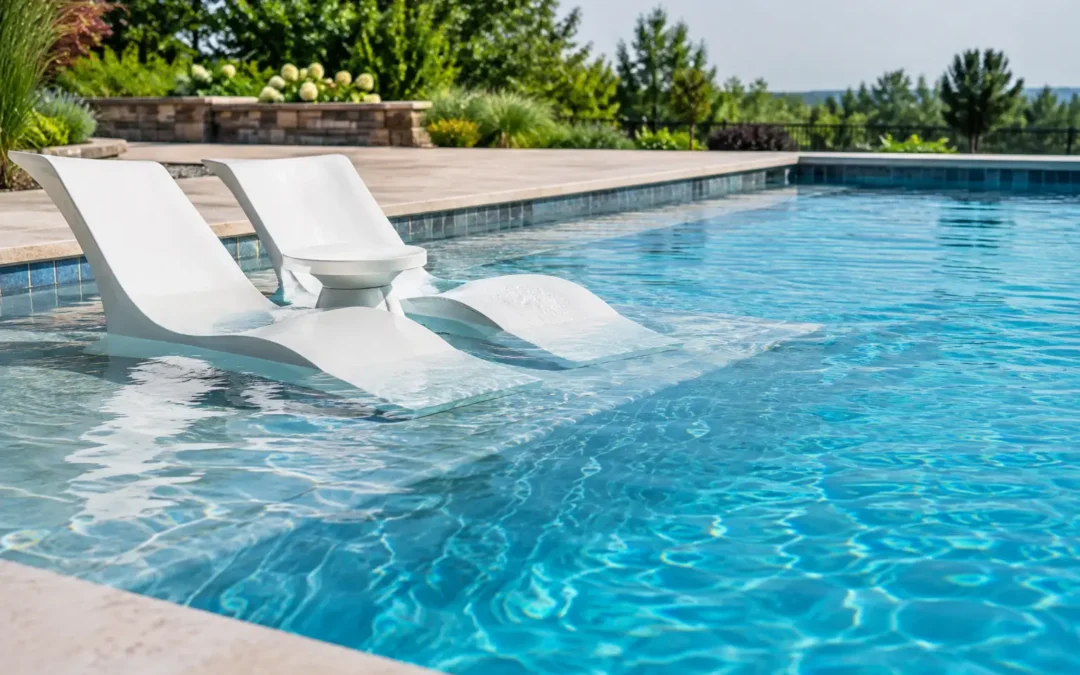
A tanning ledge can change the way your pool gets used every day. It creates a shallow, inviting place for young children to play, adults to relax in a lounge chair, and guests to cool off without fully swimming. But learning how to add a tanning ledge starts with a practical question: can your existing pool structure support one without compromising performance, safety, or appearance?
For Jacksonville homeowners, a tanning ledge is often part of a larger backyard upgrade. The strongest results come from treating it as a custom construction project, not simply a shallow shelf added to the edge of the pool.
Start With the Pool’s Structure and Layout
A tanning ledge, also called a sun shelf or Baja shelf, is a broad, shallow platform built inside the pool. Most are designed with water depths of roughly 6 to 12 inches, though the ideal depth depends on the homeowners’ intended use, selected furniture, and the pool’s overall design.
In a new pool build, the ledge can be incorporated into the shell, plumbing plan, steps, finish materials, and circulation design from the beginning. Adding one to an existing pool requires a closer inspection. The contractor needs to evaluate the pool shell, steel reinforcement, plumbing lines, skimmer locations, waterline tile, coping, deck elevation, and available shallow-end space.
This assessment matters because a tanning ledge changes more than the pool’s shape. It can affect water movement, structural loads, and the way swimmers enter and move through the pool. A well-designed ledge should feel like it has always belonged there, with proportions that complement the pool rather than make it feel crowded.
How to Add a Tanning Ledge During a Remodel
The process of how to add a tanning ledge to an existing pool typically begins with design and demolition. A pool professional will measure the existing vessel and create a plan that accounts for the intended ledge size, depth, entry points, and finish details. In many renovations, the original shallow end is partially removed and rebuilt to form the new shelf.
The construction team may cut and remove sections of the existing concrete shell, expose and tie into reinforcing steel, and form the ledge to the approved dimensions. New plumbing may be installed for returns, bubblers, or other water features before the area is shot with structural concrete. Once the shell work is complete, the ledge is finished alongside the rest of the pool during plastering or resurfacing.
This is not a project to approach as a simple cosmetic update. Cutting into an existing pool shell without proper engineering, reinforcement, and waterproof construction can lead to cracks, leaks, uneven surfaces, or circulation issues. Choosing an experienced pool remodeling contractor protects the investment and helps ensure the finished ledge performs as beautifully as it looks.
Choose the Right Size and Depth
There is no single correct tanning ledge size. A compact shelf may work well in a smaller pool where preserving swim space is the priority. Larger pools can accommodate a wider ledge that holds two chaise loungers, an umbrella sleeve, and open room for children to splash.
The key is balance. A tanning ledge should provide usable space without narrowing the pool’s primary swim lane or making the shallow end feel congested. It should also have a clear, comfortable transition into deeper water. Most homeowners prefer a ledge positioned near the entry steps, but a custom layout may place it along one side of the pool or create a dedicated lounge zone at one end.
Depth deserves equal attention. A shallow ledge offers the best experience for in-pool furniture and relaxing, while a slightly deeper shelf may be better for families with small children. Your contractor can recommend a depth that works with your pool’s existing elevations and your intended use.
Plan for Circulation and Drainage
Shallow water can become stagnant if it is not included in the pool’s circulation plan. Returns should be positioned to keep water moving across the ledge and into the rest of the pool. Depending on the layout, the design may also require adjustments to skimmers, drains, or the equipment settings that control water flow.
This is especially relevant in Northeast Florida, where pools receive heavy seasonal use, frequent rain, and plenty of sun. Proper circulation supports cleaner water, more consistent chemical distribution, and a better overall pool experience.
The deck area around the tanning ledge matters, too. If the project includes new coping, pavers, or a patio extension, the surrounding surface should be graded correctly to direct rainwater away from the pool and home. Good drainage is one of the details that separates a polished backyard renovation from one that creates avoidable maintenance problems later.
Select Finishes That Work With the Design
A tanning ledge is highly visible, so its materials should coordinate with the entire pool renovation. Many homeowners use the same interior finish across the ledge and pool for a clean, unified look. Others choose accent tile along the ledge edge, step markers for visibility, or a contrasting finish that defines the lounge area.
Light-colored finishes can make shallow water appear bright and inviting, while deeper-toned materials can create a more dramatic, resort-style appearance. Neither option is automatically better. The right choice depends on the home’s architecture, deck materials, landscaping, and the desired water color.
In-pool furniture is another design consideration. Use furniture specifically made for shallow pool shelves, and confirm that its base is compatible with the selected finish. Heavy or rough-bottomed furniture can scratch some surfaces. If you plan to use an umbrella, request a properly installed umbrella sleeve during construction rather than trying to add one after the ledge is complete.
Add Features Only When They Improve the Experience
A simple tanning ledge is appealing on its own. Still, a few carefully selected features can make it even more functional. Bubblers create gentle movement and visual interest. LED lighting improves evening ambiance and makes ledge boundaries easier to see after dark. A raised planter, fire feature, or water feature can give the shelf a stronger focal point when the pool layout allows it.
The trade-off is that each feature adds cost, plumbing, electrical work, and future maintenance considerations. A quality design does not need every available upgrade. It needs the features that match how your family will actually use the backyard.
For example, a family that spends weekends entertaining may prioritize a wide ledge with two loungers and bubblers. Homeowners focused on a clean, modern pool renovation may prefer a simple shelf with crisp tile lines and low-profile lighting. A custom approach makes room for both goals.
Account for Permits, Access, and Construction Timing
Pool remodeling projects in the Jacksonville area may require permits or inspections depending on the scope of structural, electrical, plumbing, and deck work. A professional contractor should help manage the required approvals and ensure the work meets applicable building and safety standards.
Before construction begins, consider access to the backyard. Crews may need room for demolition equipment, concrete work, material delivery, and debris removal. Landscaping, fencing, and hardscape features near the pool may need temporary protection or removal. Discuss these details early so there are no surprises once the project is underway.
Construction timing also matters. While many homeowners schedule upgrades before peak swim season, a well-planned renovation can be completed at different times of year. The best time is often when you can make clear design decisions, secure the right materials, and give the work the attention it deserves instead of rushing it for a single event.
Work With a Contractor Who Can Build It Correctly
A tanning ledge should look effortless when it is finished, but achieving that result requires careful planning beneath the surface. Structural integration, water circulation, finish selection, equipment coordination, and deck transitions all need to work together.
Bonafide Custom Pools helps Jacksonville homeowners evaluate whether a tanning ledge fits their existing pool and backyard goals, then manages the renovation from design through final construction. The right plan can turn an outdated shallow end into the part of the pool everyone uses first.
If you are considering a tanning ledge, begin with a professional site evaluation and a clear picture of how you want to enjoy the space. A thoughtful design now gives your backyard a more comfortable, more valuable place to gather for years to come.