
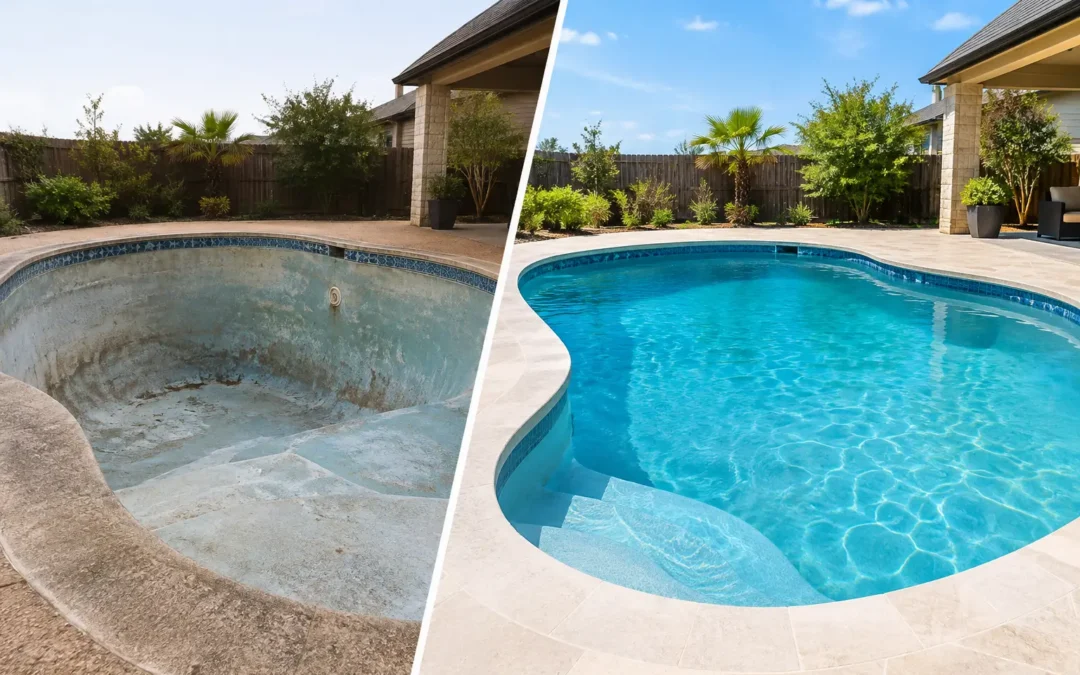
A faded pool finish, cracked waterline tile, and equipment that runs louder than it should can make an otherwise beautiful Jacksonville backyard feel unfinished. A pool renovation before and after project is not just about making the water look better in photos. Done properly, it improves the surface underfoot, updates the details you see every day, and gives the entire outdoor space a more polished, dependable feel.
For many homeowners, the most dramatic transformation comes from addressing several aging elements together instead of treating one visible issue at a time. New plaster alone can refresh a pool. Pair it with updated tile, coping, lighting, and efficient equipment, and the pool can feel newly built without changing its original footprint.
What Changes Most in a Pool Renovation Before and After Project
The “before” side of a renovation often tells the story of years of Florida sun, rain, pool chemicals, and family use. Plaster may be stained, rough, etched, or discolored. Tile can look dated or begin to loosen. Coping may crack or no longer complement the patio and home exterior. Even when the pool is structurally sound, these details can make the backyard feel older than it is.
The “after” is about more than a brighter surface. It is the difference between a pool that looks like a maintenance project and one that feels like the center of an outdoor living space. A thoughtfully selected finish can give the water a richer color. New tile can create a clean transition from water to deck. Updated coping can frame the pool with a more intentional architectural look.
Equipment upgrades are less visible, but they often make one of the biggest daily differences. A variable-speed pump, modern filtration, upgraded automation, and LED lighting can improve circulation, simplify operation, and reduce unnecessary energy use. The right choices depend on the pool, the existing equipment, and how the homeowner uses the space.
Start With the Pool’s Condition, Not a Wish List
A strong renovation begins with an honest assessment. Cosmetic wear and underlying repair needs can look similar from a distance, which is why the pool shell, plumbing, fittings, deck edges, and equipment should be evaluated before finishes are chosen.
For example, surface staining may be corrected through resurfacing, but cracks or hollow areas may require repair first. A homeowner who wants a tanning ledge, spa spillway, or new water feature may also need plumbing and structural work that changes the project scope. Addressing these needs early helps avoid surprises once construction is underway.
This assessment is also where priorities become clear. Some homeowners want a complete visual transformation for entertaining. Others are focused on restoring a rough or aging surface and bringing equipment up to current expectations. Both are valid goals, but they call for different investment levels and design decisions.
Resurfacing Sets the Foundation
Resurfacing is one of the most visible parts of a pool renovation. Traditional white plaster offers a classic appearance, while exposed aggregate finishes add texture, durability, and a broader range of water colors. A lighter finish can create a crisp blue look, while deeper blends may give the water a more dramatic tone.
The best finish is not always the darkest or most expensive option. Pool depth, surrounding landscape, sun exposure, and deck color all influence the final water appearance. A finish sample viewed in a showroom or brochure will not look exactly the same once it is underwater in a Jacksonville backyard.
Tile and Coping Bring the Design Together
Waterline tile does important practical work by protecting the transition around the pool, but it also establishes the visual style. Clean porcelain, glass accents, natural stone looks, and contemporary mosaics can each change the character of the pool.
Coping deserves the same attention. It defines the pool edge, affects how the waterline is framed, and should work with the deck material and architecture of the home. Travertine, natural stone, and concrete coping can all be appropriate depending on the desired look, maintenance expectations, and budget. The right material is one that looks refined while standing up to regular use and Florida weather.
Decide How You Want the Backyard to Work
The best pool renovations solve lifestyle problems, not just finish problems. Before selecting materials, consider how the backyard is used on an average weekend. A family with young children may value broad entry steps, brighter lighting, and easier equipment controls. Homeowners who entertain may prefer upgraded seating areas, fire features, a sun shelf, or a coordinated deck extension.
If the pool is primarily a quiet retreat, the priorities might be different: a calming water feature, softer lighting, updated landscaping zones, and a finish that makes the water feel inviting from inside the home. There is no universal “best” renovation package. The goal is to create a space that fits the way your household actually spends time outdoors.
It is also smart to look beyond the pool itself. An outdated deck can make new tile and plaster feel disconnected. In some projects, refreshing the surrounding hardscape, drainage, or outdoor living areas is what makes the finished pool feel complete. In others, a targeted interior renovation delivers exactly the improvement the homeowner needs.
Upgrade Equipment While the Project Is Open
Renovation is a practical time to evaluate aging pool equipment. Replacing a failing pump after a new surface is installed is possible, but planning upgrades as part of the larger project can make the process more efficient and coordinated.
Variable-speed pumps are a popular consideration because they can run at lower speeds for everyday circulation and higher speeds when needed for cleaning or water features. Modern automation can also allow homeowners to manage pumps, lights, heaters, and water features from a central control or mobile device. For a pool that feels complicated to operate, this can be a meaningful quality-of-life improvement.
Not every pool needs every available upgrade. A dependable contractor should explain what will improve performance, what is optional, and what makes sense for your specific pool. Equipment selection should account for pool size, plumbing layout, features, usage patterns, and long-term service needs.
Plan for the Construction Process
A renovation can feel exciting right up until the backyard becomes an active work area. Knowing what to expect makes the experience far easier to manage. The sequence generally includes preparation, demolition or removal of old materials where needed, repairs, installation of tile and coping, surface preparation, new finish application, equipment work, filling, and startup.
Timelines vary because no two pools have the same condition or scope. Weather can affect exterior work, and certain materials may require lead time. Structural repairs, deck work, or added features can extend the schedule beyond a straightforward resurfacing project. A clear contractor should set expectations before work begins and communicate when field conditions require adjustments.
Homeowners can prepare by clearing furniture and personal items from the work area, planning for access to the backyard, and discussing pets, gates, irrigation, and parking in advance. If the pool will be drained, it is especially important to rely on professionals who understand the conditions and procedures involved. This is not a shortcut project.
Avoid Renovation Decisions You May Regret
Choosing materials based only on a small sample or the lowest initial price can lead to disappointment. Pool finishes, coping, and tile need to perform in a wet, high-use environment, not just look good on installation day. Quality materials and correct installation matter because repairs are more disruptive after the pool is filled and the patio is back in use.
Another common mistake is updating only the most obvious worn feature without considering surrounding elements. New plaster next to chipped coping or aging equipment may improve the pool, but it may not provide the complete transformation the homeowner expected. That does not mean every project needs to be extensive. It means the scope should be intentional.
Finally, do not assume a renovation is purely cosmetic. Permitting, safety requirements, electrical work, and equipment changes may apply depending on the project. An experienced local contractor can identify these considerations early and manage the work with the right level of care.
A Backyard That Feels Worth Coming Home To
The strongest pool renovation before and after results are the ones that feel natural to the home and effortless to use. The water is clearer, the finishes feel current, the equipment performs reliably, and the backyard invites people outside.
Bonafide Custom Pools helps Jacksonville homeowners plan renovations around real needs, from resurfacing and tile replacement to coping, features, and equipment upgrades. Start with the condition of your pool, define how you want the space to serve your family, and choose improvements that will still feel right long after the first swim in the refreshed backyard.