
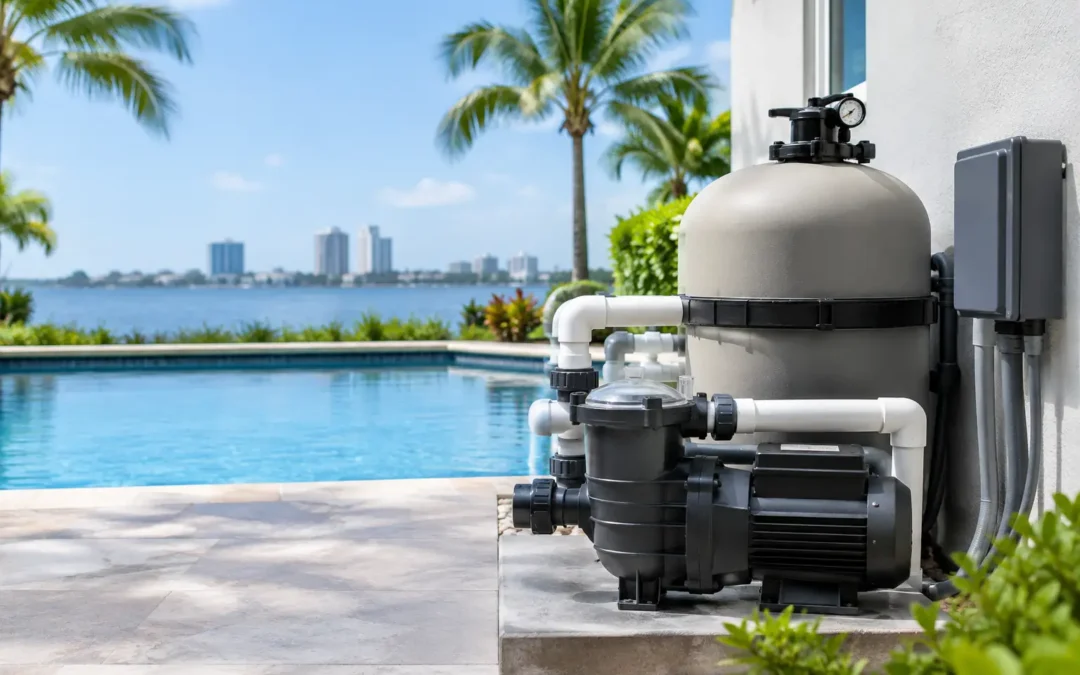
A pool can look beautiful on the surface while its equipment pad quietly tells a different story. Understanding pool equipment lifespan helps Jacksonville homeowners plan upgrades before a worn pump, heater, or filter becomes an urgent repair – often in the middle of swim season.
The useful answer is not a single number. Equipment life depends on the product, installation quality, water chemistry, runtime, maintenance habits, and Florida’s demanding heat, humidity, rainfall, and long swim season. A well-designed system with properly matched components can deliver years of dependable performance. An undersized, outdated, or neglected system may struggle much sooner.
Typical Pool Equipment Lifespan
These ranges are practical planning estimates, not guarantees. A professional inspection is the best way to determine whether a specific component needs repair, replacement, or a more comprehensive equipment upgrade.
Pool pumps: about 8 to 12 years
The pump is the working heart of the circulation system. Traditional single-speed pumps generally have a shorter useful life and higher operating costs than modern variable-speed models. A quality variable-speed pump can often perform well for 10 to 15 years when it is correctly installed and maintained.
Pump motors, seals, and bearings can wear out before the pump housing itself. Grinding sounds, frequent tripped breakers, leaks beneath the pump, reduced water movement, or difficulty priming all deserve attention. In some cases, a repair makes sense. If the pump is older, inefficient, or no longer properly sized for the pool, replacement can provide a better long-term result.
Filters: about 7 to 15 years
A filter tank may last a decade or longer, but its internal media and parts have their own replacement schedules. Cartridge filter elements commonly last two to four years, depending on cleaning practices and bather load. Sand filter media may need replacement after five to seven years, while DE grids and related internal components can wear over time.
A filter that requires constant cleaning, cannot maintain clear water, develops a cracked tank, or runs at unusually high pressure may be nearing the end of its service life. Choosing the right filter type is not just about lifespan. It should also reflect pool size, features, desired water clarity, and how much hands-on maintenance a homeowner wants to manage.
Pool heaters and heat pumps: about 7 to 15 years
Gas pool heaters often last seven to 12 years. Heat pumps can commonly reach 10 to 15 years, although Jacksonville’s humid environment, heavy use, and exposure to salt air in coastal areas can affect those ranges.
Heaters are especially sensitive to balanced water chemistry and adequate water flow. Scale, corrosion, restricted flow, and neglected maintenance can shorten their working life. A heater that cycles off, takes too long to warm the water, shows recurring error codes, or needs repeated repairs should be evaluated carefully. The right decision depends on the unit’s age, condition, repair cost, and how often your family uses the pool during cooler months.
Salt systems, chlorinators, and automation: about 3 to 15 years
Salt chlorine generator cells typically last three to seven years. Their lifespan changes significantly based on water balance, operating hours, and cleaning habits. A cell that has been repeatedly acid-washed or forced to work through poor chemistry can fail earlier.
Chemical feeders and traditional chlorinators often last several years, but seals, lids, fittings, and control components may need attention along the way. Automation panels can last eight to 15 years, while sensors, relays, actuators, and communication components may need replacement sooner. As systems age, homeowners often choose to upgrade automation for easier control of lighting, water features, temperature, and schedules from one convenient interface.
Lights, valves, and plumbing components: variable by condition
Modern LED pool lights can provide many years of service, yet a failed light may involve more than replacing a bulb. Water intrusion, aging niches, damaged cords, or electrical issues require qualified diagnosis. Valves, unions, check valves, and plumbing fittings can also last for years, but Florida sun exposure and equipment-pad vibration can cause plastic components and seals to become brittle or leak.
What Shortens Pool Equipment Lifespan in Florida?
Jacksonville pools work hard. Long periods of warm weather encourage more frequent swimming, longer pump schedules, and greater sanitizer demand. Summer storms add debris and dilute or disrupt water chemistry. High humidity and heat place additional strain on electrical and mechanical components.
Poor water balance is one of the most common avoidable causes of premature equipment problems. Water that is consistently too acidic can corrode heaters, metal fittings, and sensitive components. Excessively high calcium levels can create scale in heaters, salt cells, and plumbing. Low water levels, clogged baskets, or dirty filters can restrict flow and force pumps to work harder than they should.
Installation quality matters just as much. Equipment should be sized for the pool’s volume, plumbing layout, water features, and intended use. A powerful pump is not automatically a better pump. Oversizing can create noisy operation, inefficient energy use, and unnecessary stress on plumbing and filters. Proper hydraulic design gives every part of the system a better chance to perform as intended.
How to Extend Your Pool Equipment Lifespan
Routine care is less expensive than unexpected equipment replacement. Most homeowners can protect their investment by staying attentive to a few core habits:
- Keep water chemistry professionally tested and balanced, especially after heavy rain, major use, or seasonal changes.
- Empty skimmer and pump baskets regularly so circulation is not restricted by leaves and debris.
- Clean filters according to the manufacturer’s recommendations, not simply whenever the water begins to look cloudy.
- Watch for unusual sounds, leaks, pressure changes, weak returns, error codes, and rising utility costs.
- Schedule qualified service before summer if your equipment is aging or the pool has been underperforming.
One maintenance choice deserves caution: more cleaning is not always better. Cartridge filters can be damaged by overly aggressive cleaning, and salt cells should not be acid-washed unless inspection shows it is necessary. Following the equipment manufacturer’s guidance and using a knowledgeable pool professional helps avoid well-intended maintenance that causes damage.
Repair or Replace? Making the Smart Call
When a component fails, the least expensive repair is not always the best value. A new motor on an aging single-speed pump may restore operation, but it does not solve high energy consumption or address other worn parts. Similarly, repeated heater repairs can become difficult to justify when efficiency, reliability, and warranty protection are available through a new unit.
Replacement becomes more compelling when the equipment is near or beyond its expected range, repair costs are substantial, parts are hard to find, or multiple components are failing. It is also a smart time to consider the whole system. Upgrading a pump, filter, automation controls, and plumbing in a coordinated plan can improve circulation, simplify care, and create a cleaner equipment pad than replacing one outdated piece at a time.
For a pool renovation, equipment planning should be part of the larger conversation. New tile, coping, plaster, lighting, or water features can change both the look and the operating needs of the pool. A feature-rich backyard deserves equipment that can support it efficiently and reliably.
Plan Equipment Upgrades Before They Become Emergencies
A pool equipment pad rarely gets attention when everything is working. That is exactly when homeowners have the most options. Planning ahead allows time to compare efficient equipment, coordinate improvements with a renovation, and make decisions based on lasting value rather than a same-day failure.
Bonafide Custom Pools helps Jacksonville homeowners evaluate equipment as part of a well-built pool renovation or backyard upgrade. When your pool begins showing signs of age, a professional assessment can turn a potential breakdown into a thoughtful improvement that protects comfort, performance, and the enjoyment of your outdoor space.