
A pool finish does more than determine water color. It affects how the surface feels under bare feet, how your pool holds up to daily use, and how polished the entire backyard looks years after construction. When comparing quartz vs pebble pool finishes, Jacksonville homeowners are usually balancing a refined look and approachable price against maximum texture, durability, and visual depth.
Both are premium upgrades from basic white plaster, and both can create a beautiful custom pool. The better choice comes down to how you use your pool, the style of your home, your tolerance for texture, and the level of long-term performance you expect from the investment.
How Quartz and Pebble Pool Finishes Differ
Quartz and pebble finishes are aggregate surfaces. That means they combine a cement-based pool finish with decorative materials that add color, strength, and dimension. The visible aggregate is the primary difference.
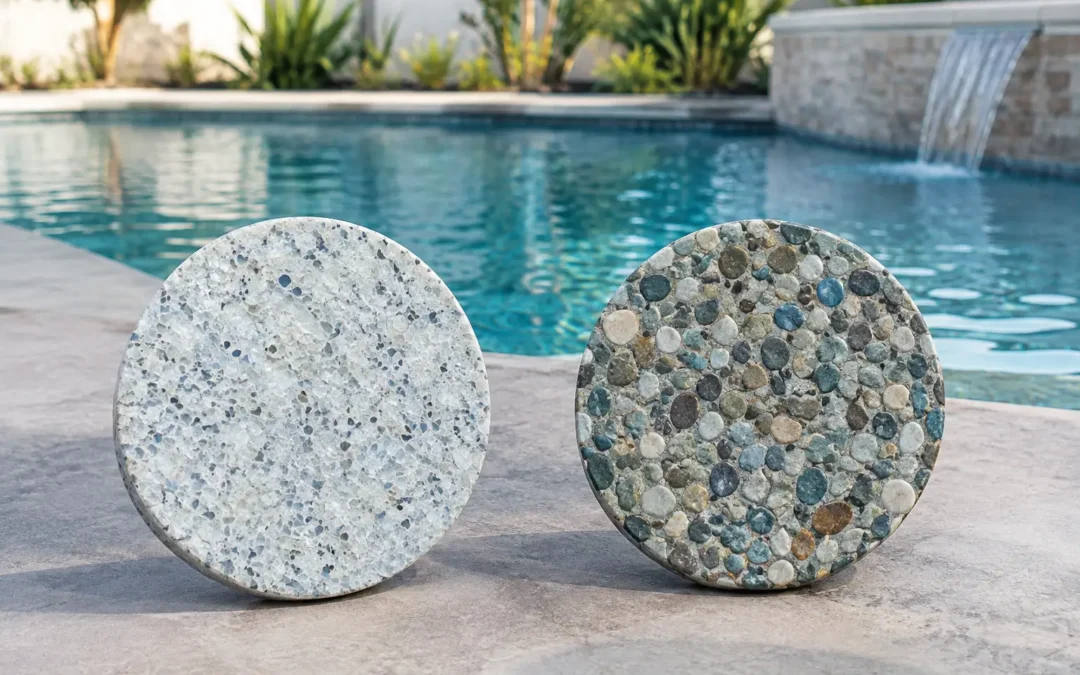
A quartz finish typically uses crushed quartz blended into the plaster. Quartz is hard, reflective, and available in a broad range of colors. The result is a smooth-looking surface with a subtle sparkle and more visual interest than traditional plaster. It works especially well for homeowners who want a clean, upscale pool without a heavily textured appearance.
A pebble finish uses small, naturally rounded pebbles that remain exposed after the finish is applied and cured. It creates a more organic, layered surface that can range from fine and relatively smooth to bold and highly textured. Pebble often gives water a deeper, richer appearance, particularly in blue, gray, and dark-toned finish blends.
Neither option is automatically right for every backyard. A well-designed pool should connect the finish to the waterline tile, coping, decking, landscaping, and the way the family plans to enjoy the space.
Quartz Pool Finishes: Polished Color and Everyday Comfort
Quartz is a strong choice for homeowners who prefer a refined surface that feels comfortable for regular swimming, lounging, and play. Because the aggregate is smaller and more integrated into the finish, quartz generally has a less pronounced texture than standard pebble.
Appearance and water color
Quartz delivers color with a soft shimmer. Lighter blends can create bright blue or turquoise water, while medium and darker tones can produce a more dramatic blue-gray effect. The final water color will also be influenced by pool depth, sunlight, surrounding structures, tile, and the color of the deck.
For a Jacksonville backyard with light travertine, porcelain pavers, or a crisp contemporary design, quartz can provide a tailored finish without competing with the rest of the architecture. It is also an excellent fit for classic pool shapes where homeowners want the water to look clear, inviting, and consistently elegant.
Comfort and maintenance considerations
Quartz is often easier on feet than a traditional exposed pebble finish, though no aggregate surface will feel exactly like smooth plaster. That difference matters for families with young children, homeowners who spend long afternoons in the shallow end, and anyone sensitive to a textured pool floor.
It is also durable when installed correctly and supported by consistent water chemistry. Still, quartz is not maintenance-free. Improper chemical balance can lead to staining, scale, etching, or a dull appearance over time. In Northeast Florida, regular brushing, balanced water, and timely attention to calcium buildup help preserve the finish and protect your investment.
Cost position
Quartz commonly falls between basic plaster and premium pebble finishes in cost. It provides a meaningful visual and durability upgrade without always requiring the budget of a high-end exposed aggregate surface. Exact pricing depends on pool size, preparation work, finish selection, access to the backyard, and whether the project is part of a larger renovation.
Pebble Pool Finishes: Natural Depth and Long-Term Strength
Pebble is often selected for custom pools where the finish itself is meant to be a defining design feature. Its natural variation creates depth that looks especially striking in freeform pools, lagoon-inspired designs, and backyards with lush planting, waterfalls, sunshelves, or natural-stone coping.
Durability for an active pool
One of pebble’s biggest advantages is its reputation for longevity. The exposed stone aggregate is exceptionally tough and generally holds up well under frequent use when the surface is professionally installed and the water is properly maintained. For homeowners planning to stay in their home for many years, that long-term performance can justify the higher initial investment.
Pebble is also a practical consideration for pools with high activity. A family pool with kids, guests, pets, and regular entertaining sees a lot of wear. A quality pebble finish is built for that level of use while maintaining a distinctive appearance.
Texture underfoot
The trade-off is texture. Standard pebble finishes can feel noticeably more textured than quartz, particularly on steps, benches, and shallow areas where people stand or sit. Many homeowners love the natural feel and do not find it uncomfortable, but it is worth experiencing in person before making a final decision.
Smaller pebble blends, often called mini pebble finishes, can offer a useful middle ground. They preserve much of pebble’s dimensional appearance and durability while creating a finer feel underfoot. The available options vary, so reviewing physical samples and completed surfaces is more reliable than choosing based on a color chart alone.
Design flexibility
Pebble finishes bring depth to water color in a way few other surfaces can match. They can support anything from a light coastal blue to deep blue-green, slate gray, or a resort-style lagoon look. Because natural aggregate has variation, the surface may read differently in direct sun, shade, and evening landscape lighting. That variation is part of its appeal, but homeowners seeking a perfectly uniform finish may prefer quartz.
Quartz vs Pebble Pool Finishes for Jacksonville Conditions
Jacksonville pools face intense sun, summer heat, frequent rain, and year-round use. Those conditions do not make one finish universally better, but they do make professional installation and ongoing water care essential.
A darker quartz or pebble blend can create dramatic water color, but it may also show calcium scale, dust, and debris more readily than a lighter finish. A very light finish can brighten the water and make the pool feel larger, although it may reveal stains or organic debris in different ways. The right choice is not simply light versus dark. It is a decision about how the surface will look in your specific setting and how you plan to maintain it.
Water chemistry is equally important. High pH, high calcium hardness, inconsistent sanitizer levels, and prolonged exposure to leaves or metal-containing water can affect any finish. A dependable equipment setup, appropriate filtration, and routine service protect both quartz and pebble surfaces. During a renovation, it may be the right time to evaluate aging pumps, filters, heaters, and automation along with the finish itself.
Which Pool Finish Is Right for Your Backyard?
Choose quartz if you want a sophisticated, colorful finish with a smoother overall feel and a budget that leaves room for other upgrades, such as new tile, coping, lighting, or a sun shelf. It is a particularly strong option for homeowners who favor clean lines, classic pool design, and comfortable everyday use.
Choose pebble if your priority is long-term durability, natural visual depth, and a finish that gives the pool a more custom, resort-level presence. It is well suited to feature-rich backyards, active family pools, and homeowners who see their pool as a lasting centerpiece of the property.
The final decision should never be made from a small sample alone. Ask to see finish samples outdoors, compare them beside your selected tile and coping, and consider them in both sunlight and shade. If possible, feel completed surfaces with your own feet. A finish that looks impressive in a showroom may feel or read differently once it is surrounded by water, decking, and landscape materials.
Make the Finish Part of a Complete Renovation Plan
Resurfacing is an opportunity to correct more than an aging pool interior. New waterline tile can sharpen the pool’s visual edge. Updated coping can tie the water to the patio. Efficient equipment can improve day-to-day operation. Thoughtful LED lighting can bring out the color and movement in either quartz or pebble after sunset.
At Bonafide Custom Pools, the goal is to help Jacksonville homeowners select materials that work together, perform reliably, and reflect the way they want to live outdoors. A well-chosen finish should feel just as right during a quiet morning swim as it does when the backyard is full of family and friends.
Before committing, look beyond the first-day color sample and picture the pool after years of sun, splashing, entertaining, and daily life. The best finish is the one that gives you confidence every time you step outside.