
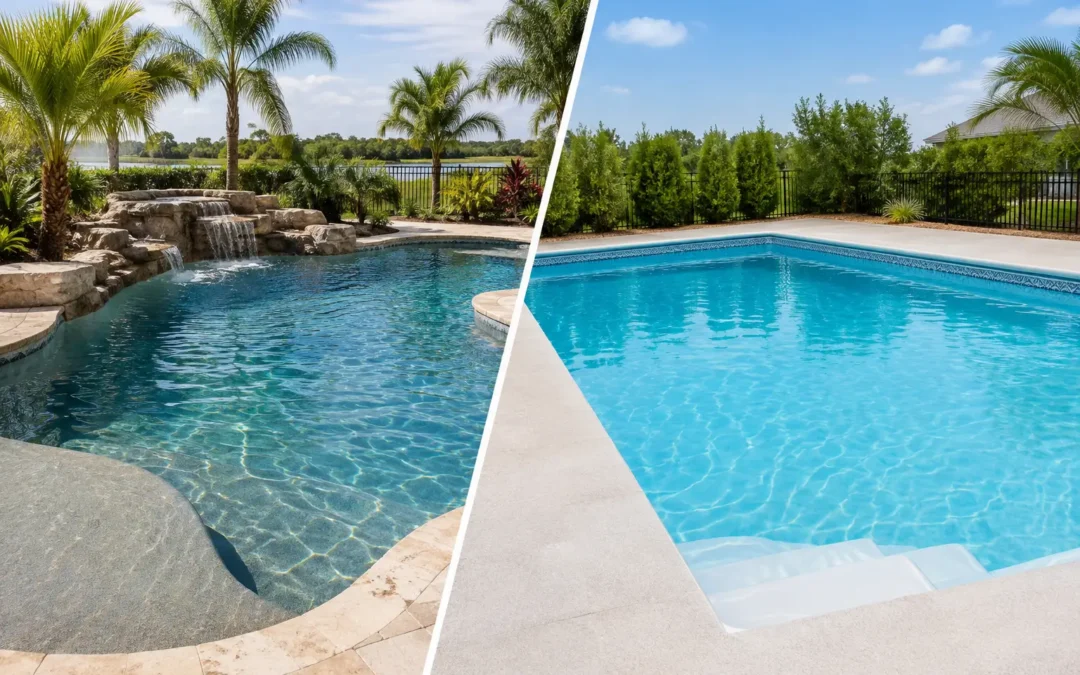
A new pool should fit the way your family actually uses the backyard, not force you into a one-size-fits-all design. When homeowners compare gunite versus vinyl, the biggest difference is not simply the pool surface. It is the level of customization, long-term maintenance, construction approach, and value each option can bring to a Jacksonville property.
For a simple, budget-conscious pool, vinyl can be a practical choice. For homeowners planning a fully tailored outdoor living space with features, distinctive finishes, and lasting flexibility, gunite is usually the stronger investment. The right answer depends on your goals, your lot, and how you want the space to perform years from now.
Gunite Versus Vinyl: The Core Difference
A gunite pool is built with a reinforced steel framework and a pneumatically applied concrete shell. After the shell cures, it can receive a plaster, quartz, pebble, or tile finish. This construction method allows the pool to be shaped around the property and designed to support integrated features such as tanning ledges, spas, waterfalls, fire features, and custom steps.
A vinyl pool uses a prefabricated liner that stretches over a support structure, typically made from steel, polymer, or another manufactured wall system. The vinyl liner creates the waterproof interior of the pool. These pools are commonly built in standard shapes, though some manufacturers offer a degree of customization.
Both pool types can create a place for family time, exercise, and entertaining. The better fit comes down to whether you prioritize lower upfront cost and a smoother initial finish or a highly custom design with premium materials and a more permanent structure.
Design Freedom and Backyard Features
This is where gunite clearly separates itself. Gunite can be formed into nearly any shape that works for the property, from a clean geometric pool that complements modern architecture to a freeform design that feels natural within mature landscaping. It can follow challenging lot lines, work around existing structures, and incorporate elevation changes that add dimension to the backyard.
That flexibility matters in Jacksonville, where no two yards are exactly alike. A narrow side yard, a screened outdoor kitchen, an existing patio, or a desired view from the home can all influence the ideal pool layout. With gunite, the design starts with the homeowner’s lifestyle rather than a limited set of pre-established shell dimensions.
Vinyl pools can still be attractive and functional, especially in a straightforward rectangular or kidney-shaped layout. However, the liner must be manufactured to the pool’s specifications. Features that create complex transitions, tight radiuses, or detailed interior contours may be less practical. Vinyl also does not offer the same finish selection as gunite. The appearance comes primarily from the liner pattern rather than from natural stone, exposed aggregate, glass tile, or premium plaster materials.
If your vision includes a sun shelf for younger children, a raised spa for evening relaxation, a vanishing edge, or coordinated tile and coping, gunite provides more room to build the backyard around that vision.
Durability in Florida Conditions
A properly built gunite pool is a permanent structure. Its reinforced concrete shell is designed for long-term use and can be renovated over time without replacing the underlying pool. When a finish begins to show its age, homeowners can update the surface, tile, coping, waterline details, or equipment while preserving the core structure.
Vinyl liners are durable, but they are not permanent. Sun exposure, chemical imbalance, sharp objects, pets, and normal aging can eventually lead to fading, tears, or leaks. Most vinyl liners need replacement after roughly seven to 12 years, although the actual lifespan depends on maintenance, water chemistry, and usage.
Jacksonville’s heat, humidity, heavy rain, and sandy soil make professional site evaluation essential for either option. Proper excavation, structural planning, drainage, and equipment installation are not details to overlook. A pool contractor should assess access to the yard, grade changes, groundwater conditions, and the relationship between the pool and the home before construction begins.
Gunite is not maintenance-free, and neither is vinyl. But homeowners who prefer the ability to renew a pool’s appearance with new finishes and materials often appreciate the long-term adaptability of a gunite shell.
Surface Feel, Care, and Repairs
Many homeowners are drawn to vinyl because the liner has a soft, smooth feel underfoot. It is also nonabrasive, which can be appealing for families with young swimmers. Routine care still includes proper water circulation, cleaning, and chemical balance, but the liner itself is easy to wipe clean when maintained well.
Gunite interiors have more finish options, and those options affect both appearance and texture. Standard plaster has a classic look, while quartz and pebble finishes offer greater visual depth and improved durability. Pebble surfaces can feel more textured than vinyl, but they create a refined, high-end look that many homeowners prefer.
Repairs are another meaningful distinction. A small vinyl tear may be patched, but a larger failure or a liner nearing the end of its life will require replacement. That replacement is a significant scheduled expense homeowners should factor into ownership costs.
Gunite pool finishes also wear over time. Staining, etching, roughness, and discoloration may eventually call for resurfacing. The difference is that resurfacing creates an opportunity to refresh the entire look of the pool. A dated plaster finish can become a contemporary quartz or pebble interior, often paired with new tile and coping for a complete renovation.
Upfront Cost and Long-Term Value
Vinyl pools generally cost less to install than custom gunite pools. Their construction process is more standardized, and their material requirements are typically lower. For a homeowner whose main priority is getting an in-ground pool at the lowest initial price, vinyl deserves consideration.
The lower entry cost should be weighed against liner replacements, fewer finish choices, and reduced flexibility for major upgrades. A vinyl pool can provide years of enjoyment, but it may not deliver the same long-term design value for a homeowner creating a premium outdoor living environment.
Gunite requires a larger upfront investment because it involves custom engineering, steel reinforcement, concrete application, curing, and finish work. It also allows the project to become part of a more complete backyard plan. A gunite pool can be coordinated with a paver deck, outdoor kitchen, covered seating area, lighting plan, landscaping, spa, and energy-efficient equipment from the beginning.
Property value is never guaranteed by a pool alone. Buyer preferences, neighborhood expectations, pool condition, and overall backyard presentation all matter. Still, a well-designed gunite pool with quality finishes and thoughtful features can strengthen a home’s appeal, particularly when it feels like a finished extension of the property rather than an added accessory.
Construction Timing and What to Expect
Vinyl pools can often be installed faster because many components are prefabricated. The schedule still depends on permitting, weather, site access, inspections, and the availability of materials and crews. Florida rain can affect excavation and construction timelines for any in-ground pool project.
Gunite construction takes longer because the shell must be formed, applied, and properly cured before the interior finish is installed. The additional time supports the custom process. It gives the project team the ability to refine details that matter, including step placement, bench depth, spa elevation, plumbing runs, deck transitions, and feature integration.
Fast is not always better if it means accepting a layout that does not serve the family well. The most satisfying pool projects start with clear decisions about how the backyard will be used, who will use it, and which features are worth including from day one.
Which Pool Is Right for Your Home?
A vinyl pool may be the right choice if you want a simpler design, have a firm lower budget, and are comfortable planning for periodic liner replacement. It can offer a clean, inviting place to swim without the investment required for a fully custom concrete pool.
A gunite pool is often the better choice for homeowners who want a tailored design and see the pool as the centerpiece of an upscale backyard. It is particularly well suited to projects involving spas, tanning ledges, custom water features, premium finishes, or a complete outdoor-living transformation.
At Bonafide Custom Pools, the goal is to help homeowners make that decision with a clear understanding of construction, finishes, performance, and future maintenance. The best pool is not the one with the longest feature list. It is the one built around your property, your family, and the way you want to enjoy your backyard for years to come.
Before choosing a pool type, walk through your yard with a professional and discuss the details that rarely fit into an online comparison: where the sun falls in the afternoon, how guests move through the space, what equipment access looks like, and which features will still matter after the first summer. Those answers will point you toward a pool that feels right from the first swim onward.