
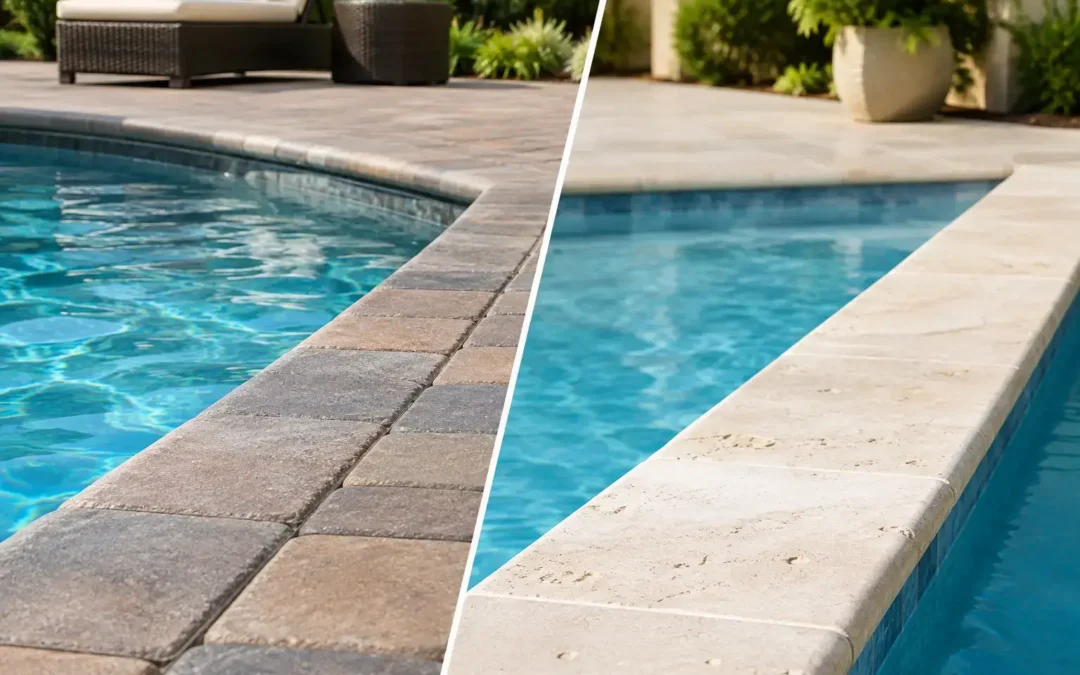
A pool’s coping is a relatively narrow detail with a major influence on how the entire backyard looks, feels, and performs. When homeowners compare paver versus travertine coping, the right answer is rarely about one material being universally better. It is about selecting the surface that fits your Jacksonville home, pool design, budget, and plans for outdoor living.
Coping creates the finished edge around the waterline. It protects the pool shell, provides a comfortable transition from deck to water, and frames the pool visually. Because it is exposed to direct sun, splashing water, foot traffic, and Florida weather, this is a decision worth making with both style and long-term performance in mind.
Paver Versus Travertine Coping: The Core Difference
Paver coping is typically made from manufactured concrete pavers or matching precast coping units. It offers a wide range of colors, profiles, textures, and sizes, making it a practical choice for homeowners who want a coordinated deck-and-coping design. It can suit clean contemporary pools, traditional backyard layouts, and nearly everything in between.
Travertine coping is cut from natural stone. Its subtle variations in color, veining, and surface texture create a more organic, upscale appearance. No two pieces are exactly alike, which gives a pool edge character that manufactured materials are designed to imitate but cannot fully duplicate.
Both materials can create a beautiful pool perimeter when properly selected and installed. The deciding factors usually come down to heat, traction, maintenance expectations, desired appearance, and total project investment.
Heat Under Jacksonville Sun
Jacksonville homeowners spend much of the year using their pools, patios, and outdoor kitchens. That means the temperature under bare feet matters.
Travertine is widely valued for its ability to remain more comfortable in direct sun than many dense, darker decking products. The stone’s naturally porous structure can help it release heat, making it especially appealing around a pool that gets strong afternoon exposure. Lighter travertine colors can further improve barefoot comfort.
Pavers can also perform well, particularly in light shades and textured finishes. However, darker colors and denser concrete products may retain more heat. If paver coping is the preferred look, choosing a light color palette and reviewing samples in direct sunlight can prevent an unpleasant surprise after installation.
Heat performance is not identical across every product. A specific paver line, stone color, finish, and backyard sun pattern all affect the final result. A qualified pool professional should help you compare actual material samples rather than relying only on showroom photos.
Traction and Poolside Safety
A pool edge should look refined, but it also needs to support safe everyday use. Kids running to the water, guests stepping out of the pool, and wet feet near the spa all make surface traction an important consideration.
Travertine offers natural texture and is often chosen for its slip-resistant feel when wet. A tumbled or brushed finish provides grip while maintaining a comfortable surface. Highly polished stone is not the typical choice for a residential pool deck or coping application, especially where water is present.
Textured concrete pavers can also provide dependable footing. Many paver products are engineered specifically for exterior use and offer surface finishes intended for patios, walkways, and pool surrounds. The key is choosing coping rated for the environment, not simply selecting a material based on color.
Coping installation matters as much as the material itself. Proper slope, secure placement, consistent joints, and a smooth transition into the deck help manage water and reduce trip hazards. Craftsmanship at the pool edge is never a detail to overlook.
Design Style and Backyard Character
Travertine creates a natural-stone look that works especially well with resort-inspired poolscapes, freeform pools, raised spas, water features, and outdoor living areas. Cream, ivory, walnut, and silver tones can bring warmth and visual depth to a backyard without overwhelming the water or landscaping.
For homeowners pursuing a premium, timeless finish, travertine can make the pool feel more custom. It pairs naturally with stone veneers, pergolas, fire features, and outdoor kitchens. Its variation is a feature, not a flaw, but that variation should be expected before the project begins.
Pavers offer more control and consistency. If your home has a defined architectural palette or you want the pool coping to precisely match a new patio, pavers can be an excellent fit. They are available in a broad selection of colors and shapes, from modern linear profiles to more traditional tumbled styles.
Paver coping is often the better choice when the goal is a cohesive, tailored design at a more controlled material cost. It can also be the practical answer for a remodel where the existing deck already uses pavers and the homeowner wants to avoid a mismatched pool edge.
Cost: Think Beyond the Initial Price
In many projects, travertine costs more than concrete paver coping. Natural stone itself carries a higher material price, and installation may require additional care in sorting, cutting, and laying out pieces for the best visual result. The exact difference depends on stone grade, thickness, coping profile, site conditions, and the size of the pool.
Paver coping generally provides greater price flexibility. There are quality options across several budgets, and matching pavers can simplify the design process when a deck is being installed or replaced at the same time. That does not mean pavers are a low-quality choice. A professionally installed paver coping system can be attractive, durable, and well suited to a high-use family backyard.
The more useful question is not, “Which is cheaper?” It is, “Which material supports the finished backyard we want without creating regrets later?” Coping is highly visible and difficult to change once the pool area is complete. Investing in the right material during construction or renovation often delivers better long-term satisfaction than choosing solely by upfront cost.
Maintenance and Long-Term Care
Neither option is maintenance-free, but both can provide years of service with appropriate care.
Travertine is porous natural stone, so sealing is commonly recommended to help reduce staining and simplify cleaning. Resealing needs vary based on product, weather exposure, and how the pool area is used. Avoid harsh acidic cleaners, which can damage stone surfaces. Routine sweeping, gentle cleaning, and prompt attention to spills help preserve the material’s appearance.
Paver coping may need periodic cleaning and, depending on the product and desired finish, sealing. Over time, some paver systems can experience joint sand loss, minor settling, or staining. One practical advantage is repairability: if an individual paver becomes damaged, it can often be replaced without rebuilding the entire coping line.
Florida’s humidity, rain, and falling organic debris can affect either surface. Good drainage, proper deck slope, and professional installation are essential for limiting algae growth, water intrusion, and movement. Material selection should never be separated from the construction details that support it.
When Paver Coping Is the Better Choice
Pavers are often the right fit for homeowners who want design flexibility, a coordinated deck, easier piece-by-piece repair options, or a more controlled investment. They are particularly effective for larger renovation projects where a new paver patio, walkways, and pool edge need to work together as one finished outdoor space.
They can also be a strong match for crisp geometric pools. A clean bullnose or contemporary square-edge paver profile can reinforce straight lines and make the entire installation feel intentional.
When Travertine Coping Is Worth It
Travertine is often worth the added investment when barefoot comfort, natural beauty, and a high-end resort feel are priorities. It is a compelling choice for homeowners building a custom pool as a lasting centerpiece for entertaining, relaxing, and enjoying family time outdoors.
It is also a natural complement to renovations designed to elevate an older pool. Updating worn coping, faded deck surfaces, and outdated tile with thoughtfully selected travertine can change the character of the entire backyard.
The best pool edge is the one that looks right on your home, feels comfortable on a July afternoon, and holds up to the way your family actually uses the space. At Bonafide Custom Pools, material decisions are considered as part of the complete design, so the coping supports a backyard built for lasting enjoyment rather than simply finishing the edge of the water.