
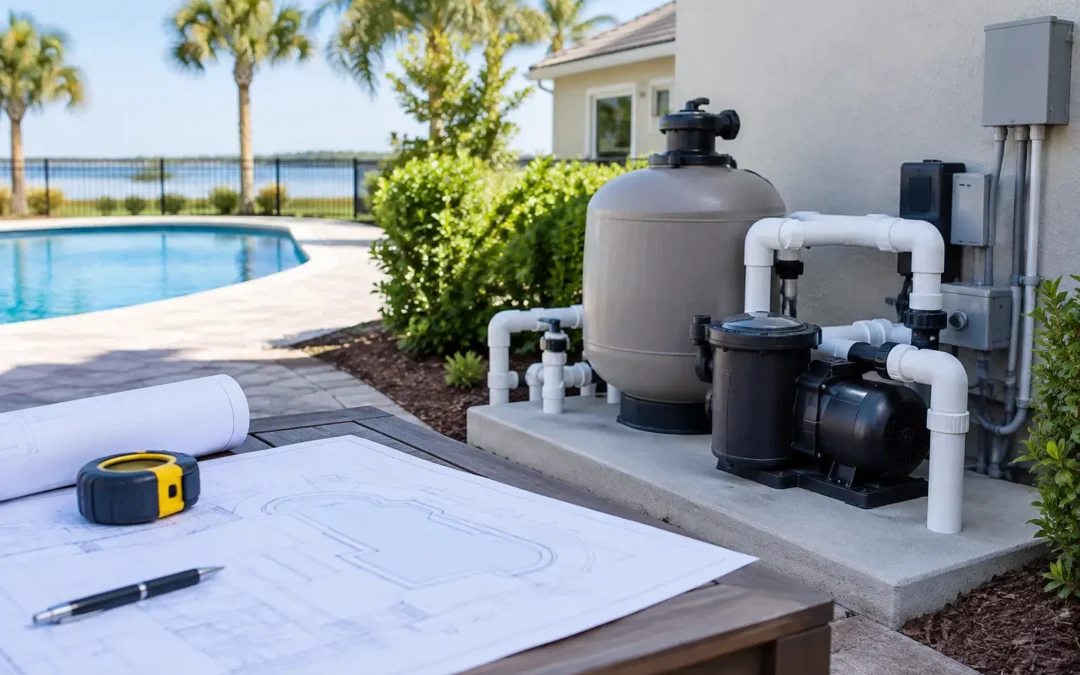
A beautiful pool can lose much of its appeal when the pumps, filters, plumbing, and controls are squeezed into an afterthought behind the house. Thoughtful pool equipment pad planning gives your system the room it needs to run reliably while protecting the clean, finished look of your Jacksonville backyard.
The equipment pad may not be the focal point of your pool design, but it affects daily comfort, energy use, maintenance access, and the long-term service life of your investment. Planning it early allows your pool builder to balance performance with placement, so the equipment works hard without taking over your outdoor living space.
Why the Equipment Pad Deserves Early Attention
Your pool equipment pad is the dedicated foundation for the mechanical components that keep the water clean, heated, circulated, and ready to enjoy. Depending on the features in your design, that may include a variable-speed pump, filter, heater or heat pump, salt system, automation panel, blower, valves, and equipment for a spa, water feature, or pool cleaner.
When this area is undersized or poorly located, small inconveniences can become expensive frustrations. A technician may not have enough room to service a filter. Equipment noise may carry toward bedrooms or an outdoor seating area. Drainage can collect around electrical components and plumbing. Future upgrades, such as a heater or chiller, may require a complete reconfiguration rather than a simple addition.
For custom pool construction, the best time to address these details is during the initial design phase, not after the deck is poured and landscaping is installed.
Choose a Location That Supports Performance
The right location depends on your lot, home layout, pool design, local requirements, and the equipment being installed. There is no single spot that works for every Jacksonville property. The goal is to create a practical service area that remains discreet without compromising circulation or access.
Keep Service Access Clear
Pool equipment needs occasional inspection, cleaning, repair, and replacement. Filters need to be opened, pump baskets need to be emptied, and heaters require adequate access for qualified service. A pad tucked tightly between a fence and the home may look hidden at first, but it can create a difficult service situation for years to come.
Allowing clear working space around the equipment is one of the simplest ways to protect the homeowner experience. It also helps prevent landscaping, furniture, and storage items from gradually blocking essential components. Your builder should plan for the footprint of the equipment itself as well as the space needed to reach valves, remove filter lids, and safely work on the system.
Think About Noise Before Construction Begins
Modern variable-speed pumps are significantly quieter than older pool pumps, but no operating equipment is completely silent. Heaters, heat pumps, blowers, and water-feature pumps can also add sound during use.
An equipment pad should be positioned with nearby bedrooms, neighbor property lines, covered patios, and outdoor kitchens in mind. Sometimes the most convenient location is close to the pool, while another location offers better sound separation. The right answer depends on how your family plans to use the backyard.
Strategic screening can help, but it should never restrict ventilation or service access. A well-designed enclosure, masonry wall, or carefully selected landscape buffer can soften the view and reduce perceived noise while preserving room for maintenance.
Plan for Jacksonville Weather and Drainage
Jacksonville homeowners understand how quickly heavy rain can change backyard conditions. Equipment should sit on a stable, level pad that is designed to support the system and direct water away from sensitive components. The surrounding grade matters just as much as the pad itself.
Standing water near equipment can create muddy access, encourage corrosion, and complicate routine service. During design, consider roof runoff, yard drainage patterns, nearby downspouts, and how the pool deck will shed water. A properly planned location helps keep the equipment area usable after a summer storm instead of turning it into a soggy corner of the yard.
Size the Pad for Today and Tomorrow
A common mistake in pool equipment pad planning is allowing only enough room for the equipment included on day one. That approach can be limiting when homeowners later decide they want warmer water in winter, a pool chiller during peak summer, a saltwater conversion, automated controls, or additional water features.
A new pool with a basic circulation system may need a modest equipment area. A feature-rich pool and spa with automation, heating, LED lighting, bubblers, and multiple pumps will require considerably more room. There is also a meaningful difference between a compact equipment layout and one that is organized for easy service and future expansion.
It is usually more cost-effective to reserve extra pad space during construction than to tear out hardscape later. The additional room does not need to make the area visually prominent. It simply gives your system flexibility as your lifestyle changes.
Coordinate Equipment With the Pool Design
The equipment pad should be planned alongside the entire backyard, not as a separate mechanical decision. Pipe runs, elevation changes, water features, and the distance between the equipment and pool all influence system design.
Longer plumbing runs can be necessary on some properties, especially when homeowners want the equipment farther from entertaining spaces. However, longer runs may require more material, careful hydraulic planning, and the right pump selection to maintain efficient circulation. Shorter is not always better if it places equipment in an inconvenient or noisy location, but the trade-off should be evaluated by an experienced pool professional.
Water features deserve special attention. Sheer descents, deck jets, scuppers, waterfalls, and raised spas can require dedicated plumbing and, in some cases, additional pumps. Planning those features from the start helps avoid visible pipe routing or equipment crowding later.
Do Not Overlook Electrical and Utility Requirements
Pool systems involve electrical controls, bonding, plumbing, and sometimes gas service. These elements must be coordinated correctly for safe operation and dependable performance. The equipment location may affect the route and cost of electrical work, gas lines for a heater, and the placement of automation controls.
Local codes, manufacturer clearances, and permitting requirements can influence exactly where equipment is allowed to sit. These requirements vary by property and equipment type, so homeowners should avoid making placement decisions based solely on what looks convenient. A professional builder can evaluate the site and account for the technical requirements before construction is underway.
This is particularly valuable on renovation projects. An older pool may have equipment installed in a cramped or outdated location. When upgrading to a more efficient pump, new filter, salt system, or heater, relocating or enlarging the pad may be the better long-term decision.
Make the Area Look Intentional
A functional equipment pad does not need to detract from an upscale backyard. The most successful designs treat it as part of the overall landscape plan. It can be positioned beyond the primary view from the patio, softened with appropriate screening, and integrated with fence lines or planting areas.
Avoid surrounding equipment with dense vegetation that will eventually crowd filters, block airflow, or drop excessive debris into the system. Choose a screening approach that gives the area a finished appearance while allowing easy entry for maintenance. Gates and access panels should be wide enough for servicing and equipment replacement.
For homeowners building an outdoor kitchen, fire feature, or covered lounge, the equipment pad should also be kept out of circulation paths. Nobody wants guests walking past a pump and filter on the way to the pool, and nobody wants a service appointment disrupting a weekend gathering more than necessary.
A Better Plan Protects the Whole Investment
Pool equipment is the working heart of your backyard. It deserves the same level of planning as the tile, coping, waterline, and outdoor living features that everyone sees. The right pad location creates a cleaner visual result, supports efficient operation, reduces avoidable maintenance challenges, and leaves room for your pool to evolve with your family.
At Bonafide Custom Pools, we help Jacksonville homeowners consider the practical details early, so the finished backyard feels polished from every angle. A well-planned equipment area may stay mostly out of sight, but its benefits show up every time your pool is easier to operate, quieter to enjoy, and ready for the next season.