
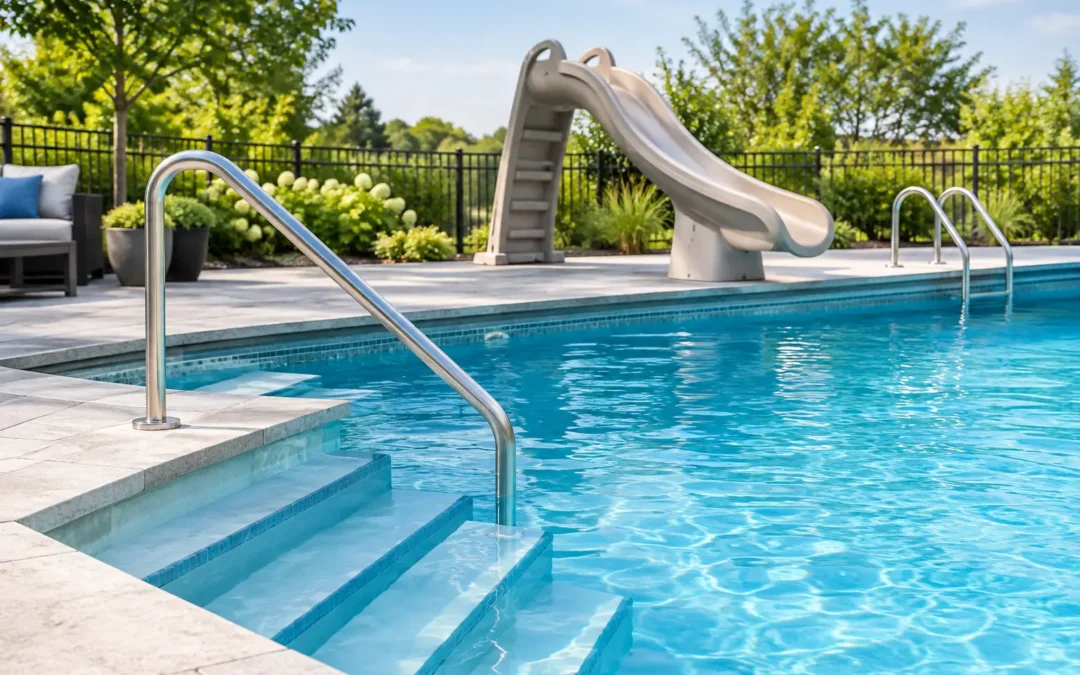
A pool’s entry is one of the first design choices your family will feel every day. The right pool entry options make getting in and out comfortable, create a natural place to gather, and give the pool a more intentional finished look. The wrong choice can leave a beautiful pool feeling cramped, inconvenient, or less welcoming for young children, older relatives, and guests.
For Jacksonville homeowners planning a new custom pool or a substantial renovation, entry design deserves more attention than an afterthought. It affects usable swim space, safety, furniture placement, circulation around the deck, and the way the entire backyard functions when people come over.
Choosing Pool Entry Options Around How You Live
There is no single best entry for every pool. A family with small children may prioritize broad, shallow steps and handrails. Homeowners who entertain often may prefer a tanning ledge that doubles as a lounge area. A homeowner remodeling an older pool may need an entry solution that works within the existing shell rather than requiring a complete structural redesign.
Start with the people who will use the pool most. Consider whether anyone needs a gentler transition into the water, whether pets will swim, and whether the pool will be used primarily for active play, exercise, quiet relaxation, or hosting. The pool shape, available deck area, and desired water features also matter. A good design balances all of these factors instead of treating the entry as a separate detail.
Pool Steps: The Most Versatile Choice
Built-in steps are the most common pool entry option because they work with nearly every pool style. They provide a clear, stable route into the water and can be designed to blend into a traditional rectangular pool, a freeform lagoon-inspired layout, or a modern geometric design.
Corner Steps
Corner steps use one corner of the pool, preserving more open water for swimming. They are a practical choice for compact backyards, lap-oriented pools, and homeowners who want a clean layout without sacrificing too much interior space. Depending on the configuration, the top step can also provide a small perch for supervising children or cooling off without fully swimming.
Their trade-off is capacity. Corner steps are functional, but they do not create the broad social zone that larger entries provide. If several people tend to enter the pool at once, a wider step configuration may be more comfortable.
Full-Width Steps
Full-width steps stretch across much or all of one end of the pool. They create a generous entry point, add visual symmetry, and provide several depths for people to sit and relax. For family pools, this configuration is especially appealing because children can play on the upper steps while adults remain close by.
The design requires more pool length than corner steps, so it is best planned early. In a narrow or short pool, full-width steps can reduce the uninterrupted area available for swimming. In the right layout, however, they make the pool feel more welcoming and more substantial.
Curved and Custom Step Designs
Curved steps soften the look of a freeform pool and can follow the contours of surrounding decking, a raised spa, or a naturalistic water feature. Custom steps may include a wide first tread, integrated benches, or a shape tailored to the pool’s unique geometry.
This is where craftsmanship makes a visible difference. Step proportions should feel comfortable underfoot and look balanced from the patio, kitchen windows, and main outdoor living area. Quality tile work and finish selections help define each level while tying the entry into the overall pool design.
Tanning Ledges Create a Relaxed Gathering Space
A tanning ledge, sometimes called a sun shelf or Baja shelf, is a broad shallow platform just below the waterline. It is typically large enough for lounge chairs, children at play, or adults who want to sit in cool water without committing to a full swim.
For many Jacksonville backyards, a tanning ledge turns the pool into a more complete outdoor living space. It gives homeowners a comfortable place to relax during warm afternoons, lets parents stay near younger swimmers, and creates a polished resort-style look. Bubblers, umbrella sleeves, and low-profile water features can make the ledge even more enjoyable.
A tanning ledge is not always the right answer. It consumes a meaningful amount of interior pool area, especially in smaller designs. It also needs enough depth to be comfortable and safe while remaining shallow enough for its intended use. Thoughtful sizing is essential. An oversized ledge can make a modest pool feel more like a wading area than a swimming pool.
Beach Entries Offer a Gradual Transition
A beach entry slopes gently from the deck into the water, much like walking into the ocean from shore. It can create a striking resort-style appearance and offers a gradual approach that some homeowners find more comfortable than steps.
This option is especially attractive for households that want easy access for children, pets, or guests with limited mobility. It can also make a pool visually distinctive, particularly when paired with natural stone, landscaping, or a freeform design.
The trade-off is space and construction complexity. Beach entries require a larger footprint than standard steps, and their sloped surface changes how much of the pool is shallow water. They are usually best suited to larger backyards or designs where a natural, expansive feel is the central goal. Surface finishes also deserve careful consideration, since the entry receives frequent foot traffic and should remain comfortable under bare feet.
Ladders, Rails, and Assisted Access
Stainless steel ladders and handrails are valuable additions even when a pool already has built-in steps. A rail at the entry provides extra confidence for older adults, recovering swimmers, and anyone who appreciates a stable point of contact. It can be incorporated discreetly so it supports accessibility without interrupting the pool’s visual appeal.
Ladders are often used in deeper areas of the pool or in streamlined designs where preserving swim space is a priority. They do not offer the same easy access as broad steps, but they are durable, compact, and useful as a secondary exit point.
For homeowners with specific mobility needs, access should be discussed during the earliest design conversations. The right solution may involve wider steps, strategically placed rails, shallower transitions, or equipment designed for assisted entry. Planning these details in advance produces a better result than trying to add them after construction is complete.
Entry Placement Changes the Entire Pool Layout
The placement of an entry matters as much as the style. An entry facing the house creates a direct visual and physical connection from the patio to the water. An entry positioned to one side can keep the central view open and create room for a spa, water feature, or deeper swim lane elsewhere.
Think about traffic patterns before finalizing the plan. Guests should be able to move from the home, outdoor kitchen, seating area, and pool without constantly crossing through a crowded entry zone. If the pool will sit close to a covered patio, consider sightlines as well. A tanning ledge or wide step section can become an attractive focal point, while a less visible corner entry may better suit homeowners who want the water to take center stage.
In a remodel, placement decisions may be limited by the existing structure, plumbing, and dimensions. Even so, a renovation can often improve the experience through new tile, resurfacing, updated coping, better handrails, or redesigned step finishes. An experienced pool contractor can explain what is practical before you commit to a concept that requires major structural changes.
Materials and Details That Improve Everyday Use
The finish around an entry receives more contact than nearly any other area of the pool. Tile can visually define step edges and tanning ledges, helping swimmers see changes in depth. The plaster or interior finish should complement the water color you want while holding up to regular use. Slip resistance, texture, ease of cleaning, and comfort all deserve consideration.
Lighting is another detail that pays off after sunset. Well-placed pool lights can make steps and ledges easier to see while creating a more inviting nighttime setting. Integrated bubblers, spillways, or accent tile can add personality, but the entry should remain easy to navigate. Features should enhance the experience, not compete with it.
Build an Entry That Fits Your Backyard
The best pool entry feels natural from the first time you use it. It should support the way your family relaxes, make guests feel comfortable, and complement the scale and architecture of your backyard. At Bonafide Custom Pools, each design conversation should account for access, safety, appearance, and the long-term enjoyment of the space.
Before choosing from the available pool entry options, stand in your backyard and picture a busy Saturday afternoon: where people will walk, where children will play, where you will sit, and how the pool will look from your favorite seat. That picture is often the clearest guide to an entry design you will appreciate for years.