
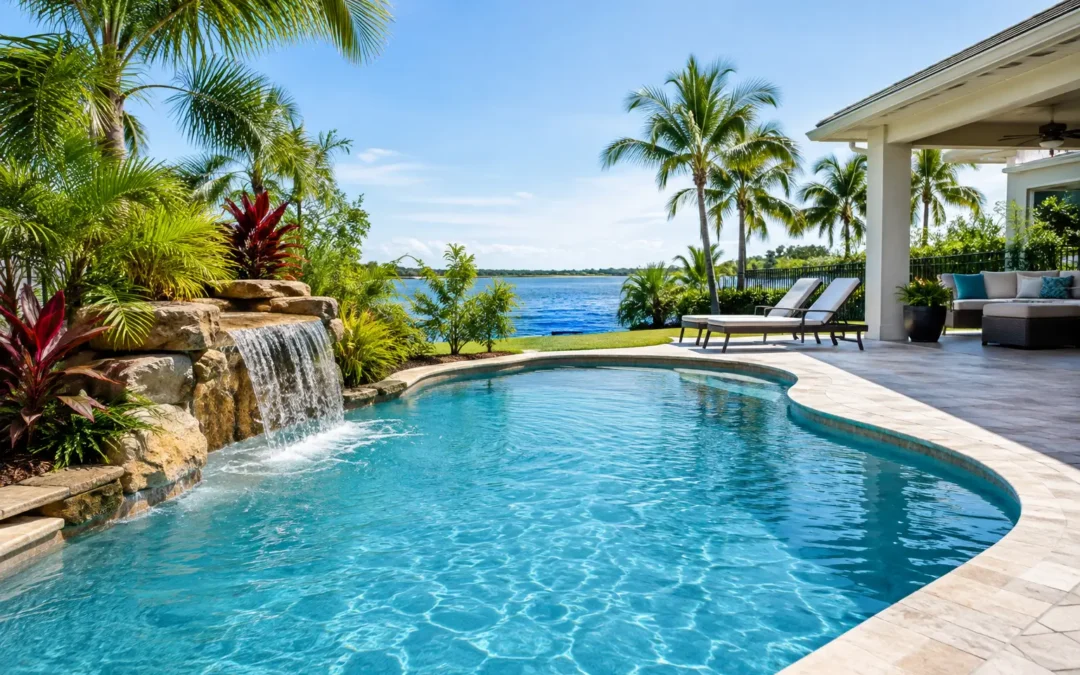
A new pool can be the centerpiece of a Jacksonville backyard, but pool landscaping is what makes the space feel complete. The right combination of planting, hardscape, shade, and lighting turns an open pool deck into a private place for family time, entertaining, and everyday relaxation. The wrong choices can create extra maintenance, drainage issues, or a view that feels unfinished within a few seasons.
For Florida homeowners, a successful plan has to do more than look good on installation day. It should handle heat, humidity, heavy rain, salt exposure near the coast, and the way your family actually uses the yard. That is why landscaping should be considered alongside pool design, not as an afterthought once construction is complete.
Start Pool Landscaping With How You Live Outside
Before choosing a palm tree or paver color, think about the purpose of the backyard. A family with young children may want broad, open sightlines from the patio to the water and durable turf space for play. Homeowners who entertain often may prioritize a larger seating area, an outdoor kitchen, accent lighting, and planting beds that soften the perimeter without crowding guests.
The pool itself sets the direction. A clean-lined geometric pool often pairs well with structured plantings, simple porcelain pavers, and modern planters. A freeform pool can support a more natural setting with layered greenery, curved beds, and stone details. Neither approach is better. The goal is to make the pool, deck, home, and landscape feel like one intentional outdoor living space.
It also helps to identify the views worth improving and the ones worth screening. You may want to frame a preserve view, draw attention to a water feature, or create privacy from a neighboring two-story home. Those decisions affect where trees, hedges, pergolas, and lighting belong.
Choose Plants That Work Around a Florida Pool
Jacksonville landscapes need plants that can tolerate strong sun, summer rain, and occasional cold snaps. They also need to coexist with a pool environment. Plants that drop heavy leaves, berries, seed pods, or flowers can add unwanted skimming and cleaning. Aggressive root systems can become a concern near decking, plumbing, and structures when plants are installed too close.
A balanced planting plan usually includes a mix of taller privacy plantings, mid-height texture, and low-growing color near deck edges. Clumping palms, podocarpus, viburnum, ornamental grasses, bird of paradise, and certain native or Florida-friendly varieties can all have a role depending on sun exposure and the desired look. The best selection depends on your soil, irrigation, drainage, and maintenance expectations.
Keep planting beds far enough from the pool edge that mulch and loose soil do not wash onto the deck during a storm. Use a defined edging detail to keep beds clean and visually crisp. For homeowners who prefer a low-maintenance backyard, larger architectural plants and fewer varieties often create a more polished result than many small, high-maintenance flowering plants.
Artificial turf can be useful in selected areas, particularly where natural grass struggles between deck space, shade, and frequent foot traffic. It provides a clean visual transition and gives children or pets a usable surface. However, turf can become hot in direct Florida sun, so it is not always the right choice for every exposed area. A thoughtful mix of turf, planting beds, and shaded hardscape often delivers better comfort.
Plan for Privacy Without Closing In the Yard
Privacy is one of the most requested features in a backyard pool project. Fast-growing screens can help, but planting a solid wall around every boundary can make a yard feel smaller and restrict airflow. Instead, use privacy planting strategically where it solves a real sightline issue.
Layering is especially effective. Taller screening plants can block an unwanted view, while lower shrubs and ornamental grasses keep the base of the landscape from looking bare. Decorative panels, a pergola, or a water feature can also create privacy near a seating area without relying on plants alone.
Build Shade Into the Design
Jacksonville sunshine is part of the appeal of owning a pool, but a deck with no shade can be difficult to enjoy for long stretches of the day. Shade should be planned around the areas where people sit, eat, and supervise swimmers, not simply placed wherever there is room.
A covered patio creates reliable protection from sun and rain and can extend the usable season of an outdoor kitchen or lounge area. A pergola provides architectural definition and filtered shade, particularly when paired with a retractable canopy or carefully selected climbing plants. Freestanding umbrellas offer flexibility, but they need properly designed bases and storage plans for windy weather.
Mature trees can provide beautiful natural shade, although their location deserves careful consideration. Avoid placing high-debris trees immediately over the pool. Consider how roots, canopy spread, and leaf drop will affect the deck and water over time rather than focusing only on the tree’s size at installation.
Use Hardscape to Define Each Outdoor Zone
Hardscape gives pool landscaping its structure. Pavers, travertine, concrete finishes, retaining walls, seat walls, fire features, and steps can establish clear areas for circulation, dining, lounging, and planting. These details also influence safety and long-term maintenance.
Deck materials should be selected for appearance, traction, heat retention, and maintenance requirements. Light-colored finishes can be more comfortable underfoot in summer, while heavily textured surfaces may hold more dirt and require more effort to clean. Natural stone has a premium look, but every material has different sealing and care needs. The right answer depends on budget, style, and how much routine upkeep you want to manage.
Do not overlook transitions. A raised planter wall can double as casual seating. Broad steps can connect a patio to a pool deck gracefully. A well-designed coping and deck edge can make an older pool renovation look completely refreshed. These are the details that make a backyard feel custom rather than assembled from separate parts.
Design Drainage Before the First Storm
Beautiful landscaping cannot overcome poor drainage. Jacksonville receives heavy rainfall, and water needs a controlled path away from the home, pool deck, and planting beds. Standing water can damage turf, stress plants, stain hardscape, and make outdoor spaces less enjoyable.
Grade changes, deck drains, swales, drainage basins, and properly placed planting beds should all work together. On some properties, especially those with tight side yards or existing drainage challenges, the landscape plan may need to solve practical water-management issues before decorative improvements begin.
This is one reason a coordinated pool project matters. When pool construction, decking, and landscape planning are considered together, it is easier to account for elevations, drainage routes, equipment access, and future planting space. Trying to force these elements into place after construction can limit the options and increase costs.
Add Lighting for Safety and Atmosphere
Outdoor lighting extends the value of a pool area well beyond daylight hours. It should first help people move safely around steps, changes in elevation, pathways, and entertaining areas. Once those needs are covered, lighting can highlight palms, textured walls, water features, and focal-point plants.
Avoid treating every part of the yard the same. Too much bright lighting can flatten the atmosphere and shine into neighboring properties. A layered plan with subtle path lighting, controlled uplighting, and warm illumination around seating areas creates a more inviting result. Pool lighting, landscape lighting, and exterior home lighting should be selected to complement one another rather than compete.
Leave Room for Pool Equipment and Service Access
Equipment may not be the most glamorous part of the backyard, but it is essential to reliable pool ownership. Landscaping can soften the view of pumps, filters, heaters, and automation systems without restricting ventilation or technician access. A screen wall or thoughtfully spaced hedge can conceal equipment while keeping the area functional.
This is especially valuable during a renovation that includes energy-efficient equipment upgrades. A Jandy Pro Dealer such as Bonafide Custom Pools can help homeowners coordinate the visible and technical parts of the project so the finished space looks refined and performs reliably.
Make the Landscape Match the Long-Term Investment
The best pool landscaping is not a collection of trendy features. It is a durable plan that supports the way you want to use your home for years. Quality materials, proper drainage, suitable plants, and purposeful lighting protect the investment while creating a backyard that feels personal from the moment you step outside.
As you plan, focus on the experience you want at the end of a long Jacksonville day: a comfortable place to cool off, gather with friends, watch children play, or simply enjoy a quiet evening near the water. Let that vision guide every choice, from the largest palm to the smallest path light.