
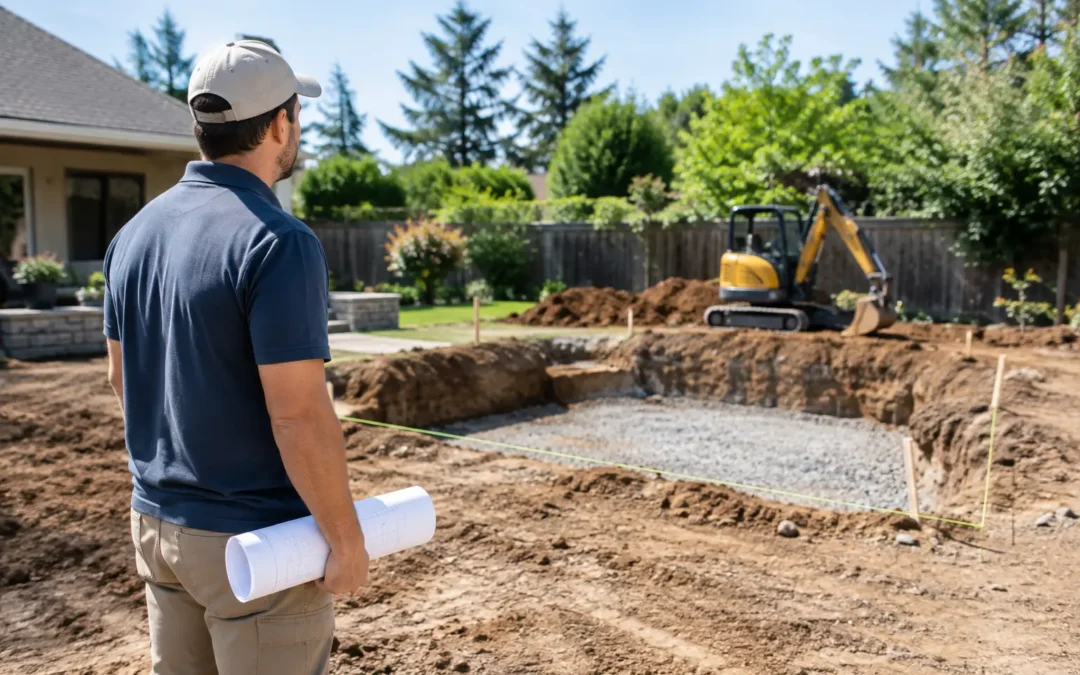
A custom pool begins long before excavation equipment arrives. To prepare your yard for a pool, homeowners need a clear plan for access, drainage, utilities, and the outdoor features that will surround the finished space. The right preparation protects your property, keeps construction moving efficiently, and gives your new pool the setting it deserves.
For Jacksonville homeowners, yard preparation also means accounting for Florida’s sandy soil, heavy seasonal rain, mature trees, and high water tables in certain areas. A qualified pool builder can evaluate those conditions early and shape a construction plan around your property rather than forcing a standard design onto it.
Start With the Backyard You Want to Use
Before marking the pool location, think beyond the water itself. Consider how your family entertains, where you want lounge seating, whether you need a shaded area, and how people will move from the house to the pool. A beautiful pool can feel cramped if the deck is too narrow or the layout leaves no room for dining, grilling, or supervising children.
Property lines, easements, setback requirements, septic systems, and existing structures all affect what is possible. Your pool contractor should review the survey and help identify a realistic location before design decisions become final. This early step can prevent expensive revisions after permits are submitted or work has started.
It also helps to consider sightlines. Many homeowners want a clear view of the pool from the kitchen, living room, or primary outdoor gathering area. Others prefer a more private setting with landscaping or fencing. The best design balances those preferences with the practical requirements of construction and code compliance.
Think Through the Full Outdoor Living Area
A pool project often changes how the entire backyard functions. If you expect to add a summer kitchen, fire feature, pergola, screen enclosure, or outdoor shower later, discuss it before construction begins. Planning these features together can create a more cohesive result and avoid tearing out new decking to install utilities afterward.
Even if you are building in phases, reserve the proper space and consider future electrical, gas, and plumbing needs. Thoughtful pre-planning is one of the clearest ways to protect the long-term value of your investment.
Clear Access Before Pool Construction Begins
Pool construction requires room for excavation equipment, material deliveries, and crews. In many cases, the easiest route is through a side yard, but gates, fences, landscaping, and utility equipment may need to be temporarily removed or protected. A narrow side yard does not always prevent a pool project, but it can affect equipment choices, labor requirements, and construction logistics.
Walk the anticipated access route with your builder. Identify low tree branches, irrigation heads, air-conditioning equipment, pavers, garden beds, and fence sections that could be affected. If equipment must cross a lawn or driveway, ask how the area will be protected and what restoration work is included once construction is complete.
Homeowners should also move patio furniture, grills, planters, play equipment, and personal items out of the work zone. Construction sites are active, and clearing the area gives crews a safer, more efficient place to work.
Address Drainage and Grade Early
Drainage is one of the most overlooked parts of preparing a yard for pool construction. Jacksonville’s summer storms can deliver significant rainfall in a short period, so water needs a deliberate path away from the home, pool deck, and neighboring properties.
A pool builder will evaluate the existing grade and determine whether the project needs grading adjustments, drains, swales, or other water-management solutions. The goal is not simply to keep the pool area dry. Proper drainage helps protect the home’s foundation, reduce erosion, and prevent standing water around the deck and landscaping.
Do not assume a flat-looking yard drains correctly. Small changes in elevation can direct water toward the house or cause runoff to collect near the pool. Existing downspouts, roof drainage, retaining walls, and neighboring lots should all be part of the conversation.
If your yard has a high water table or consistently wet areas, the excavation and structural plan may require additional consideration. These conditions are manageable when identified early, but they should not be discovered after the excavation is underway.
Locate Utilities and Review Existing Systems
Before any digging begins, underground utilities must be located and marked. This includes electric, gas, water, cable, communications lines, irrigation piping, and private utility runs that may not appear in public records. In Florida, contacting Sunshine 811 is a necessary step before excavation, but private lines and backyard systems may require additional investigation.
Your builder should also review the pool equipment location. Pumps, filters, heaters, automation controls, and electrical components need an accessible, code-compliant area that does not disrupt the look or function of the backyard. Equipment placement affects noise, maintenance access, utility connections, and future upgrades.
Older homes may need electrical improvements to support new pool equipment, lighting, heaters, or water features. If you are considering a spa, chilled water feature, or advanced automation, discuss those choices during design. Planning for the right capacity from the start is far more efficient than trying to add it after the pool is complete.
Protect the Landscape Features Worth Keeping
Not every existing plant or tree needs to be removed. However, mature landscaping can complicate excavation, deck installation, and drainage if it is too close to the planned pool area. Tree roots can interfere with construction and, over time, create problems for decking or underground lines.
Ask your pool professional which trees, shrubs, and hardscape elements can realistically remain. A healthy specimen tree may be worth designing around, while a declining tree or one with aggressive roots may be better removed before work begins. The answer depends on the species, root zone, pool placement, and desired deck layout.
Save any plants you intend to relocate before excavation starts. Once heavy equipment is on site, protecting delicate landscaping becomes much harder. You should also plan for the final landscape design after construction, including privacy screening, low-maintenance plantings, lighting, and areas that will be easy to maintain around the pool.
Understand Permits, Approvals, and Timing
A professional pool project involves permits, inspections, and safety requirements. Depending on the property and municipality, the process may include zoning review, construction permits, electrical permits, barrier requirements, and drainage considerations. Homeowners in communities with an HOA may also need design approval before construction can begin.
Your contractor should guide you through the required construction process and explain what documents or approvals are needed from you. The timing of permits can influence the construction schedule, especially when a project includes significant outdoor living features or unique site conditions.
It is wise to discuss timing realistically. Rain, inspections, material availability, soil conditions, and change requests can affect the schedule. Reliable contractors communicate what to expect at each stage and keep homeowners informed when conditions require adjustments.
Prepare Your Household for the Construction Period
Pool construction transforms a backyard, but it is still a construction project. Expect noise, dust, deliveries, and temporary changes to daily routines. Keep pets away from the work area, make arrangements for children to avoid the site, and let nearby neighbors know when work is scheduled to begin.
If your irrigation system serves the future pool area, it may need to be capped, rerouted, or repaired after decking and landscaping are complete. Consider taking photos of the yard before construction begins, particularly around fences, driveways, landscaping, and existing hardscape. Clear documentation gives everyone a useful reference point during the project.
You may also want to decide in advance where construction materials can be staged and where workers should park when possible. Small logistical decisions can make the experience more organized for your household and your neighbors.
Build With the Finished Backyard in Mind
The best time to make smart backyard decisions is before excavation begins. When the pool placement, drainage plan, access route, utilities, and outdoor living features are coordinated, construction has a stronger foundation for success.
Bonafide Custom Pools helps Jacksonville homeowners plan these details with the same care that goes into the finished design. A well-prepared yard does more than make construction easier. It gives your family a more functional, beautiful place to relax, entertain, and enjoy for years to come.