
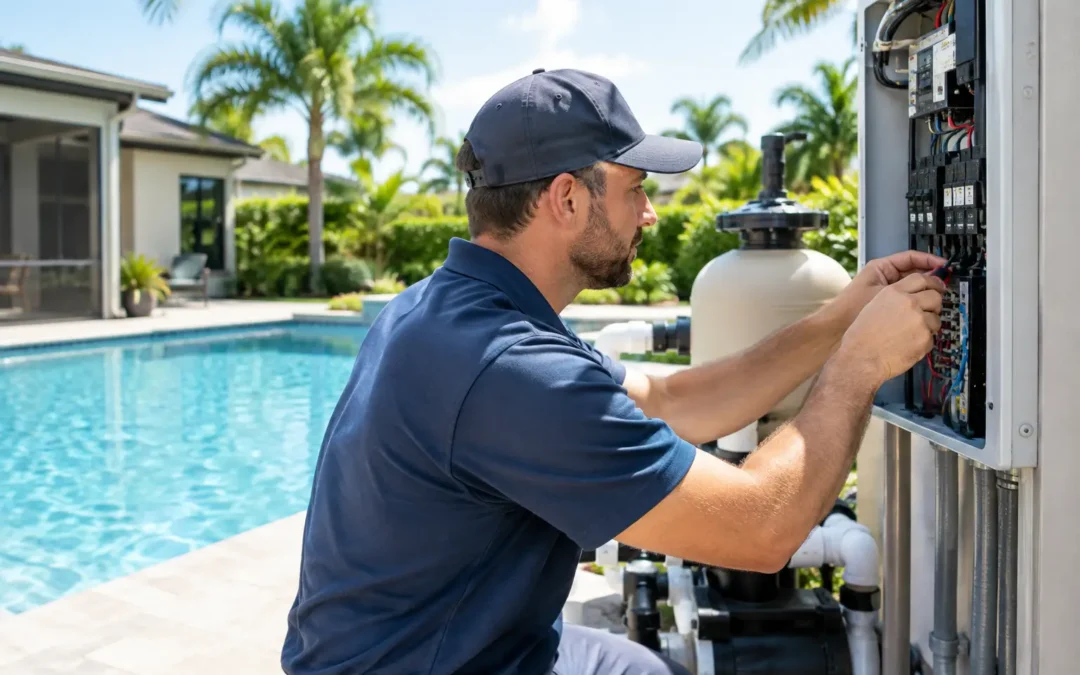
A beautiful pool can have premium finishes, custom tile, and the right features for entertaining, but the systems behind the waterline deserve the same level of attention. This pool electrical requirements guide explains what Jacksonville homeowners should expect when planning a new pool or major renovation. Electrical planning affects safety, equipment reliability, inspection approval, and how well your pool performs for years to come.
Pool electrical work is not an area for shortcuts or assumptions. Florida pools operate in heat, rain, humidity, and frequent storm conditions. A qualified pool contractor and licensed electrical professional should coordinate the work from the early design stage, not treat it as an afterthought once the deck is poured.
Why Pool Electrical Planning Starts Before Construction
Every pool needs a coordinated electrical plan. The plan accounts for the pool equipment, lighting, safety systems, automation controls, nearby structures, and the electrical capacity of the home. The right approach protects the homeowner from costly changes later, such as having to cut a finished deck to add wiring, relocate equipment, or correct a failed inspection.
In Jacksonville, permitting and inspection requirements apply to new pools and many substantial renovations. Local requirements, the adopted version of the National Electrical Code, and the specifics of the property all influence the final installation. That is why a site review matters. A pool in an open backyard with a detached equipment area may require a different approach than one near a screened enclosure, outdoor kitchen, or existing patio.
Electrical design also needs to reflect how the family intends to use the space. A basic circulation system has different needs than a feature-rich pool with LED lighting, a spa, water features, a heater, landscape lighting, and app-based automation. Planning for those choices early creates a cleaner installation and leaves room for future upgrades.
Pool Electrical Requirements Guide: The Core Safety Systems
Most homeowners hear the words grounding and bonding used together, but they perform different jobs. Both are essential around a pool.
Grounding provides a path for fault current and helps electrical safety devices operate as intended. Bonding connects conductive components in and around the pool area so they remain at the same electrical potential. This reduces the risk of a voltage difference that could create a dangerous shock hazard near the water.
A properly designed bonding system may involve the reinforcing steel in a concrete pool shell, the pool water bonding fitting, metal parts associated with the pool, certain equipment components, and other conductive elements within the required area. The exact work depends on the pool design, materials, and current code requirements. Plastic components are not automatically exempt from the overall bonding plan, especially when nearby metal or electrically powered equipment is involved.
This is one reason a pool should never be viewed as simply a hole, a pump, and a light. The pool shell, deck, equipment pad, water, and electrical systems need to work together as one carefully planned installation.
GFCI Protection Around Pools
Ground-fault circuit interrupter protection is a central part of pool electrical safety. A GFCI is designed to shut off power quickly when it detects an imbalance that may indicate electricity is traveling along an unintended path. Because pools combine water, wet surfaces, and electrical equipment, this protection is required for many circuits serving pool-related equipment and receptacles.
Depending on the design, GFCI protection may apply to pool pumps, lighting circuits, convenience outlets, spa equipment, and other components. The exact requirements can vary with the equipment type and local code adoption. Your electrician should select the appropriate protection and verify proper operation during installation.
Homeowners should also understand that a tripped GFCI is not a nuisance to ignore. It can signal moisture intrusion, a damaged cord, a failing device, or an equipment issue that needs professional attention. Repeated tripping calls for diagnosis, not a larger breaker or a bypass.
Dedicated Circuits for Pool Equipment
Pool equipment draws significant power, and many components need dedicated circuits. The pump, heater, heat pump, salt chlorine generator, automation panel, lights, blower, and spa equipment may each have specific electrical requirements. A modern variable-speed pump can be more efficient than older equipment, but it still needs correct wiring, overcurrent protection, and a properly sized circuit.
The equipment pad should be planned with service access in mind. Technicians need room to inspect wiring, reach disconnecting means where required, and safely maintain pumps, filters, heaters, and control panels. A crowded pad may look tidy at installation, but it can make future service more difficult and expensive.
Before construction begins, the electrical team should confirm whether the existing home service has enough capacity for the planned pool. Adding a heater, spa, or extensive outdoor amenities can change the load calculation. In some cases, the home may need panel upgrades or electrical service improvements to support the project properly.
Lighting, Automation, and Outdoor Features
Pool lighting has moved far beyond a single white fixture. Modern LED lights can create a more polished nighttime setting while using less energy than older alternatives. However, the transformer, junction components, wiring methods, and controls must be compatible with the selected lights and installed according to manufacturer instructions and applicable code.
Low-voltage lighting is common, but low voltage does not mean casual installation. The wiring route, connections, transformer placement, and access for maintenance still matter. The same is true for landscape lights, illuminated water features, deck lighting, and lighting inside a screen enclosure.
Automation adds convenience by allowing homeowners to manage circulation schedules, lighting scenes, heating, and water features from a control panel or mobile device. It also adds planning considerations. A well-designed automation system needs protected power, organized wiring, reliable communication connections, and enough panel capacity for the components selected.
When adding an outdoor kitchen, fire feature, pergola, or entertainment area near the pool, the project team should review the whole backyard rather than treating each feature as separate work. Coordinated design helps prevent awkward outlet locations, insufficient power, or exposed equipment that interrupts the finished look.
Clearances and Existing Electrical Hazards
Overhead and underground electrical lines must be evaluated before pool excavation and construction. Required clearances can affect the pool location, diving area, equipment pad, and placement of nearby structures. An existing utility line that seems unrelated to the project can become a major design issue once the pool footprint is established.
Underground utilities should be identified before digging begins. This protects the property, reduces avoidable delays, and helps the construction team choose safe routes for pool plumbing and electrical conduits. Existing electrical lines serving landscape lighting, sheds, irrigation controls, or other backyard features may need to be relocated or protected.
Receptacle placement is another common consideration. Outdoor outlets near the pool must meet applicable requirements for location, weather resistance, and GFCI protection. Homeowners should resist the temptation to rely on extension cords for equipment, lighting, or outdoor entertainment. Temporary cords around wet areas create avoidable risk and do not replace a properly installed electrical solution.
What Changes During a Pool Renovation
A renovation is an ideal time to assess aging electrical components. Replastering or replacing tile alone may not require major electrical changes, but a broader renovation often does. New lights, a variable-speed pump, a salt system, a heater, or automation controls can reveal that the original wiring and panel configuration are no longer adequate.
Older pools may have outdated lights, deteriorated conduit, corroded connections, or bonding conditions that need attention. Bringing these items into the project scope early helps avoid a situation where a beautiful new finish is completed before an electrical concern is discovered.
At Bonafide Custom Pools, pool design and renovation decisions are approached as connected parts of the finished backyard. Equipment performance, safety, aesthetics, and long-term serviceability should all support the homeowner’s investment.
Questions to Ask Before Work Begins
Before approving a pool proposal, homeowners should have clear answers about who is handling electrical permits, inspections, and coordination with the utility provider if needed. They should also know which equipment is included, whether the existing electrical panel has been evaluated, and how future upgrades could be accommodated.
Ask where the equipment pad will sit, how visible it will be from entertaining areas, and how technicians will access it later. Confirm the location and controls for lights, automation, and any water features. These details may feel minor during design, but they shape daily convenience after the pool is complete.
A quality pool project should make the technical work feel straightforward to the homeowner without minimizing its importance. When the electrical plan is handled correctly from the start, your backyard is positioned to be safer, more efficient, and ready for the features that make time at home feel genuinely special.