
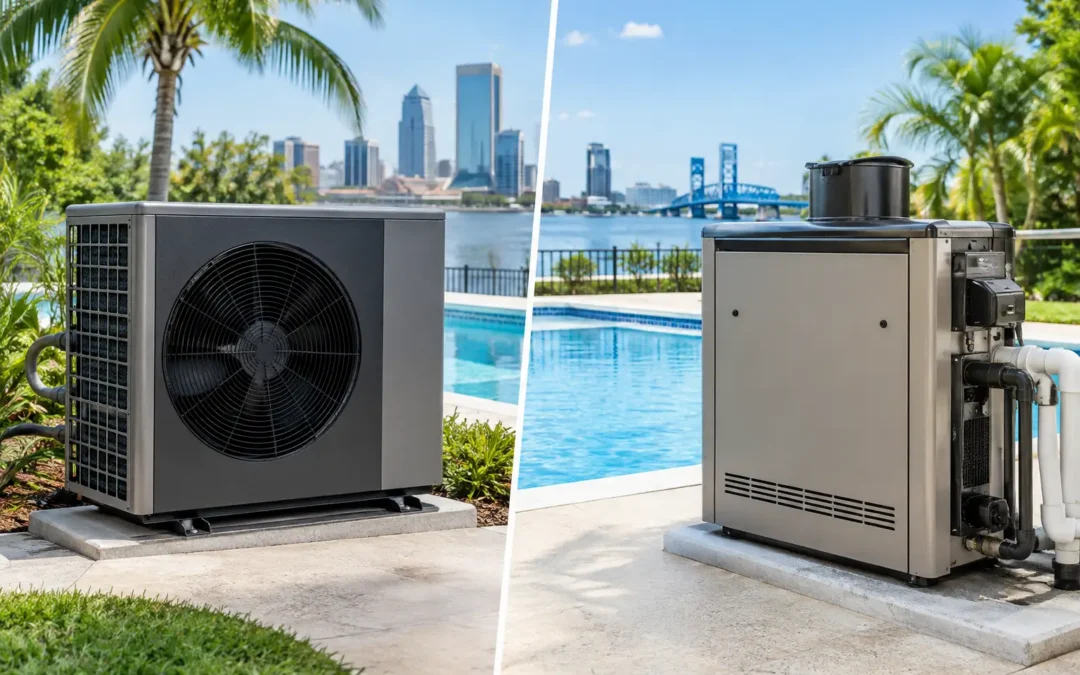
A pool heater can determine whether your Jacksonville backyard is used for a few hot summer months or enjoyed from early spring through late fall. When weighing heat pump versus gas heaters, the best choice is rarely about which unit is simply “better.” It comes down to how quickly you want to heat the water, how often you swim, your available utilities, and the kind of long-term operating costs you want to manage.
For many Northeast Florida homeowners, a heat pump is the practical answer for steady, efficient pool comfort. A gas heater can be the stronger fit when fast heat matters most. Understanding the difference before a new build or equipment upgrade helps protect your investment and keeps your pool tailored to how your family actually lives outdoors.
How Pool Heat Pumps and Gas Heaters Work
A pool heat pump uses electricity to pull warmth from the surrounding air and transfer it into the pool water. It does not create heat through combustion. Because Jacksonville has a warm, humid climate for much of the year, there is often plenty of ambient heat for a properly sized heat pump to work efficiently.
A gas pool heater burns natural gas or propane to produce heat directly. This process delivers a high level of output quickly, allowing the heater to raise water temperature much faster than a heat pump under typical conditions.
Both systems can provide reliable comfort when installed correctly. The important distinction is their heating approach: heat pumps favor efficiency and gradual temperature maintenance, while gas heaters favor speed and flexibility in cooler weather.
Heat Pump Versus Gas Heaters: The Key Differences
The right system starts with an honest look at your swim habits. A homeowner who swims several days a week and wants to keep the pool at a consistent temperature has different needs from someone who heats the pool only before weekend gatherings or holiday visits.
Heating Speed
Gas heaters are the clear choice for fast recovery. If the water is cool on Friday afternoon and you want it comfortable for guests on Saturday, a gas heater can raise the temperature far more quickly than a heat pump. This performance is also valuable for spas, where homeowners often expect heat on demand.
Heat pumps operate more gradually. They are designed to maintain a desired temperature efficiently, not to make dramatic temperature changes in a matter of hours. A heat pump works best when the pool is heated consistently and the homeowner plans ahead.
Operating Efficiency
For routine pool heating in Jacksonville, a heat pump is often the more economical system to operate. Since it moves existing heat instead of generating all of it through fuel combustion, it can deliver multiple units of heat for every unit of electricity it consumes. Warm outdoor conditions improve this advantage.
Gas heaters generally cost more to run for extended periods, especially when the pool is kept warm day after day. That does not make them a poor investment. It simply means they are usually better suited to occasional heating, rapid warm-ups, and homeowners who prioritize responsiveness over the lowest ongoing energy use.
Actual costs depend on utility rates, pool size, water temperature, wind exposure, equipment condition, and whether the pool is covered. A properly fitted thermal cover can reduce heat loss significantly, no matter which heater you choose.
Performance During Cool Weather
Jacksonville winters are relatively mild, but cool spells still affect pool-heating performance. A heat pump becomes less efficient as outdoor air temperatures fall because there is less heat available to capture. It can still operate during many Florida winter days, but it will heat more slowly and use more electricity when the air turns cold.
A gas heater is less dependent on outdoor air temperature. It remains the more dependable option for rapid heating during cold snaps or for homeowners who want to use a spa throughout the year. If winter swimming is a priority rather than an occasional bonus, this difference deserves real weight in the decision.
Upfront Installation Requirements
Heat pumps typically require a properly sized electrical connection, adequate airflow around the unit, and a level equipment pad. Their location matters. Crowding a heat pump against walls, landscaping, or other equipment can restrict airflow and reduce performance.
Gas heater installation may require access to a natural gas line or a propane tank, along with correctly sized gas piping and compliant clearances. If gas service is not already available at the property, installation can become more involved. For a propane system, homeowners also need to plan for tank placement and fuel deliveries.
During a new pool project, these requirements can be incorporated into the overall equipment layout from the beginning. During a renovation, the existing electrical capacity, plumbing, gas access, and equipment-pad space should be evaluated before a heater is selected.
Which Heater Fits Your Backyard Lifestyle?
A heat pump is often the right fit for homeowners who want an extended swim season without the higher fuel cost associated with frequent gas heating. It is particularly well suited to families who use the pool regularly, prefer a stable water temperature, and are comfortable allowing the system time to do its work. It also makes sense when the primary goal is keeping a pool comfortably warm rather than rapidly heating a spa.
A gas heater is often the better choice for households that use the pool intermittently, entertain on short notice, or want a spa that can be heated quickly. It is also a strong option for homeowners who want the confidence of more consistent cold-weather performance. The higher operating cost may be worthwhile when convenience and fast results are the priority.
Many upscale pool designs benefit from a hybrid approach. A heat pump can handle efficient day-to-day pool heating, while a gas heater supports a connected spa or provides rapid heating when needed. This approach involves a larger initial investment and more equipment planning, but it can deliver flexibility that a single heat source cannot match.
Pool Size, Features, and Covers Matter More Than Many Homeowners Expect
Heater selection should never be based on a simple rule of thumb alone. A large pool needs more heating capacity than a compact plunge pool, but volume is only part of the equation. Water features, raised spas, spillovers, vanishing edges, shaded yards, and open exposure to wind can all increase heat loss.
A pool with frequent waterfalls or deck jets may need those features turned off while heating to avoid losing warmth. An attached spa has its own demands because it needs much higher temperatures than the pool. In those cases, a gas heater often becomes attractive even if a heat pump is selected for the main pool.
A quality pool cover is one of the most practical additions for either heating system. Evaporation is the largest source of pool heat loss, and covering the water when the pool is not in use helps preserve the warmth you paid to create. It also can reduce the time and energy needed to reach your target temperature.
Equipment Quality and Installation Protect Performance
The heater itself is only one part of a dependable pool system. Correct plumbing, proper water flow, thoughtful equipment placement, and compatible automation all affect performance. An undersized heater may run constantly without delivering the comfort you expect. An oversized or poorly planned system can add unnecessary cost without solving the real issue.
Modern automation can make pool heating easier to manage by allowing homeowners to set schedules, adjust temperatures, and coordinate heating with pumps and water features. For a custom pool or renovation, this is the time to consider the full equipment package rather than treating the heater as an isolated purchase.
Bonafide Custom Pools helps Jacksonville homeowners evaluate heater options within the larger picture of pool design, renovation goals, equipment efficiency, and long-term enjoyment. The right recommendation should reflect the pool you have, the features you want, and the way your family plans to use the space.
Before choosing between a heat pump and a gas heater, think past the first warm-up. Consider the mornings you want to swim, the evenings you want to relax in the spa, the months you want to extend your season, and the operating costs you are comfortable carrying. That is how a heater becomes more than a piece of equipment – it becomes part of a backyard built for you.